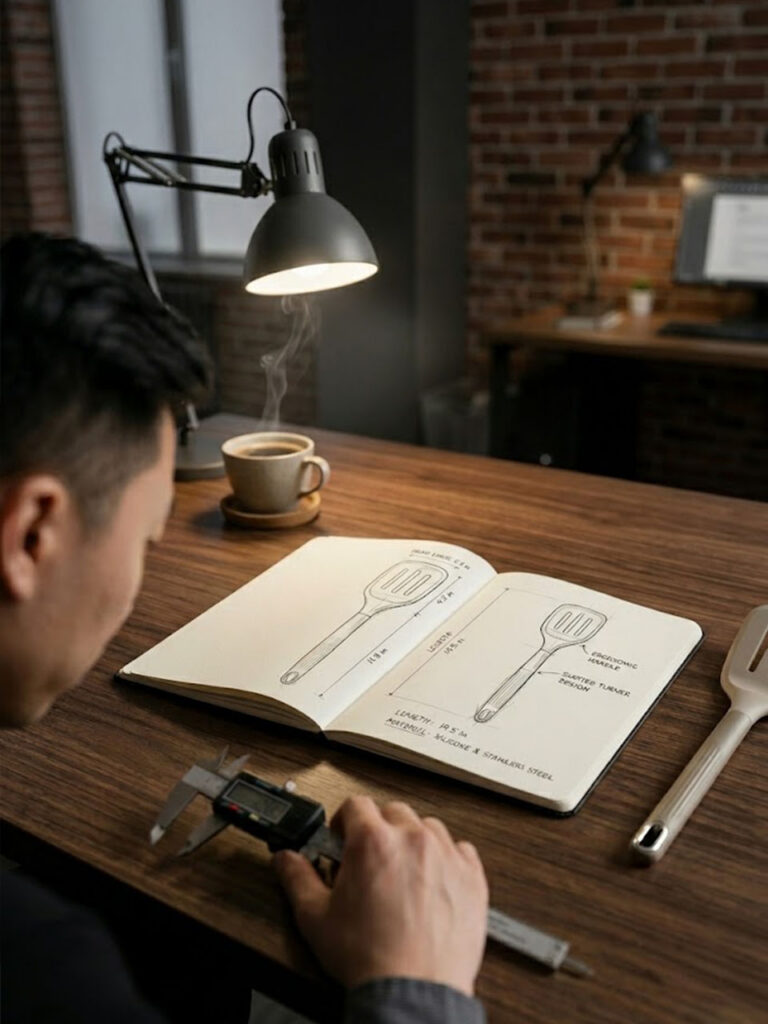
A kitchen product may have an attractive design, a competitive price, and a convincing material story. But a strong first impression does not always translate into positive reviews, repeat orders, or sustainable sales.
The problem often begins before production. A team becomes attached to the concept before confirming how the product performs under real-use conditions.
Through projects handled by the L-Tools kitchenware development team, we have seen promising ideas move forward, change direction, and sometimes stop before launch. These experiences suggest that consumer need, product performance, retail positioning, and production feasibility must support the same product promise.
This article explains how brands and retailers can make those decisions more carefully, beginning with what users actually need the product to do.
Start With What People Actually Need
Trends can reveal market opportunities, but they cannot validate a product. The better starting point is a specific use situation: cooking, serving, cleaning, storage, or repeated handling.
A popular color, material story, or lightweight construction may attract attention while creating friction in daily use. Kitchenware sampling should therefore examine more than appearance.
Our guide to what buyers notice during kitchenware sampling explains how hand feel, balance, finish, packaging and movement can influence buyer confidence.
When an Attractive Concept Failed the Use Test
In one children’s tableware project, the initial samples combined soft colors, a lightweight feel and a plant-fiber positioning. The concept appeared well suited to its target market.
However, during a controlled hot-liquid test, the product released a noticeable resin-like odor. A closer review indicated that the material composition and heat behavior did not match the expectations created by the product positioning.
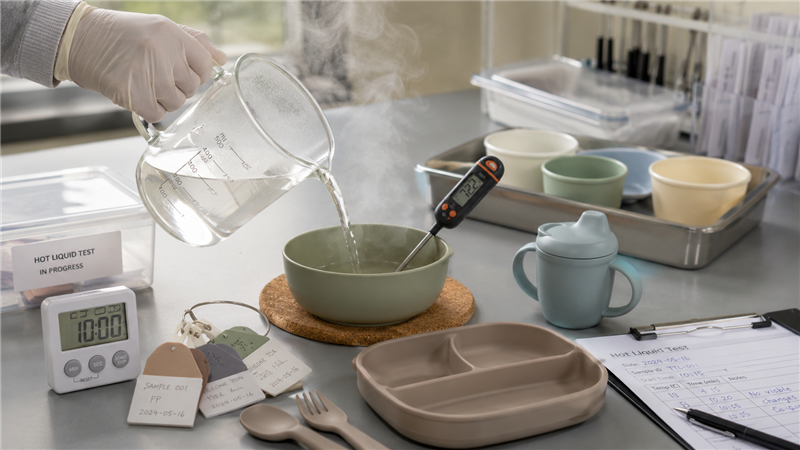
The odor was not, by itself, a compliance conclusion. It was a product-experience failure and a clear reason to review the material disclosure, test conditions and intended use more carefully.
For products intended for the U.S. market, the FDA includes cookware and food-preparation surfaces in its explanation of food-contact substances. The relevant requirements still depend on the material, product application, intended use and destination market.
Rather than trying to market around the problem, we recommended stopping the original direction. The project moved to a different material construction that performed more consistently under the intended internal tests.
The lesson is not that one material is always better than another. It is that brands should validate realistic use conditions before committing to tooling, packaging, inventory and launch promotion.
Test for Real Use, Not Just First Impressions
A product sample should not only confirm its appearance. It should reveal what happens when the product faces heat, pressure, repeated movement, cleaning and foreseeable user behavior.
This is where product design and prototyping becomes commercially important. Testing a selling point early can prevent that same feature from becoming a source of complaints or returns later.
When “Ultra-Lightweight” Created a Bigger Risk
In one cookware project, the client wanted an extremely lightweight stainless-steel frying pan with a high-arched wooden handle. The concept was intended to make the pan feel easier to lift and visually different from heavier alternatives.
The specification worked on paper, but a controlled kitchen test revealed two problems. The pan base began to lose its flatness under heat, while the handle connection became less stable.
Because users may preheat cookware before adding food, we treated this as a foreseeable use condition. A pan that loses stability during normal cooking behavior can create uneven performance and avoidable customer dissatisfaction.
The revised specification used a thicker pan structure and a more stable riveted, heat-resistant handle. The product became slightly heavier, but it remained stable during the subsequent internal test.
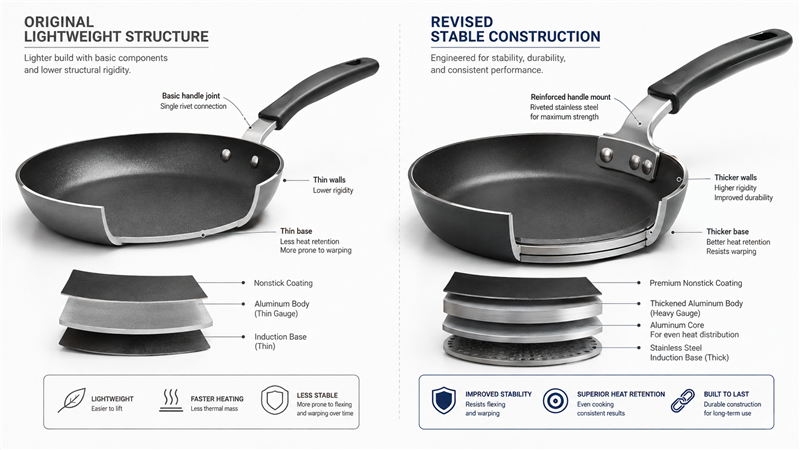
This project reinforced a principle that also applies to other small manufacturing details: the lightest specification is not automatically the best commercial specification.
Build Differentiation Around Use, Not Decoration
Colors, finishes and packaging can help a product attract attention. But within a kitchen utensil collection, lasting differentiation often comes from a functional detail users can feel immediately.
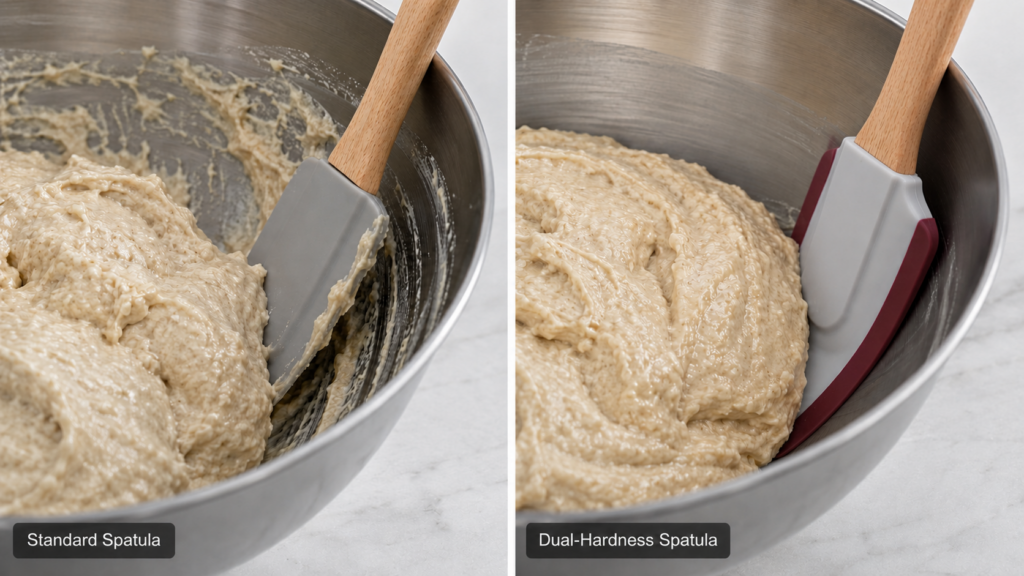
We saw this in a silicone-spatula project. Instead of relying on color as the main selling point, the development focused on a recurring problem: many spatulas are either too soft to apply pressure or too rigid to follow the curve of a bowl.
The solution was a dual-hardness silicone head. A firmer inner structure helped the user apply pressure, while the softer outer edge stayed close to the sides and bottom of the bowl.
Post-launch feedback repeatedly mentioned the product’s ability to scrape bowls more cleanly. Similar-looking alternatives sometimes received the opposite feedback: flexible versions lacked control, while rigid versions struggled to reach curved edges.
This comparison suggested that the product’s real value did not come from its appearance. It came from an engineering decision connected to a recognizable user problem.
Packaging Is Part of the Product Experience
A product can perform well and still disappoint customers if it arrives scratched, loose inside the box, or difficult to understand. Packaging protects both the product and its perceived value before the customer begins using it.
This is why how packaging affects kitchenware product sales should be considered during development rather than after product approval. The product shape, handle position, insert structure, outer carton and sales channel should be reviewed together.
Packaging tests should also reflect the way the finished product will travel. ISTA’s guidelines for selecting packaging test procedures explain that procedure selection should consider the packaged product and its distribution environment.
![The same kitchen tool shown in poorly fitted packaging and in a secure retail-ready insert.]](https://l-tools.com/wp-content/uploads/图3-1024x576.png)
The objective is not to create the most elaborate box. It is to provide enough protection and clarity without adding unnecessary material, shipping volume or retail complexity.
Build Product Lines, Not Isolated SKUs
A successful product can open the door to a broader range, but every additional SKU should have a clear role. Matching colors alone do not create a meaningful collection.
Strong coordinated kitchenware collections usually share a consistent design language, price position and target user. At the same time, each item should solve a distinct task rather than simply filling space in a larger set.
This approach allows brands to extend a range around verified use cases while maintaining consistent materials, finishes, packaging and quality expectations.
Make the Product’s Value Clear Online
Customers cannot hold, weigh or test a kitchen tool on an e-commerce page. Product images therefore need to show more than a clean product cutout.
Baymard’s research found that many users try to understand a product’s physical size through its images. An in-scale product image can make dimensions easier to understand than specifications alone.
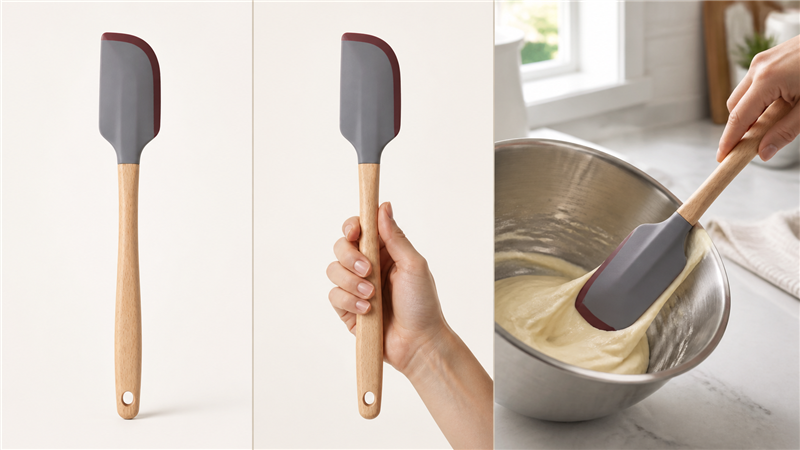
For kitchenware, that could mean showing a spatula inside a mixing bowl, a pan held naturally in one hand, or a utensil stored in a standard drawer. The image should demonstrate the product promise, not merely provide an attractive background.
Conclusion
Kitchen products that sell consistently are built through connected decisions. A real consumer need shapes the concept, testing reveals whether the specification works, functional details create differentiation, and packaging and product images help customers understand the value.
The objective is not to eliminate every development risk. It is to identify expensive mistakes early, before they become tooling costs, excess inventory, returns or weak customer feedback.
Ready to Build a Better Kitchen Product?
L-Tools supports brands and retailers from initial concepts and prototypes through material selection, testing, packaging and scalable production.
If you are reviewing a new kitchenware idea or improving an existing range, you can send us your product brief, reference sample, target price and destination market. Our team can help assess the details that may affect usability, production consistency and retail readiness before you commit to a larger order.