

Project Background
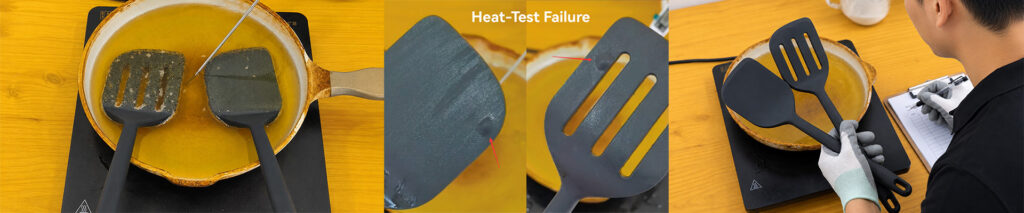
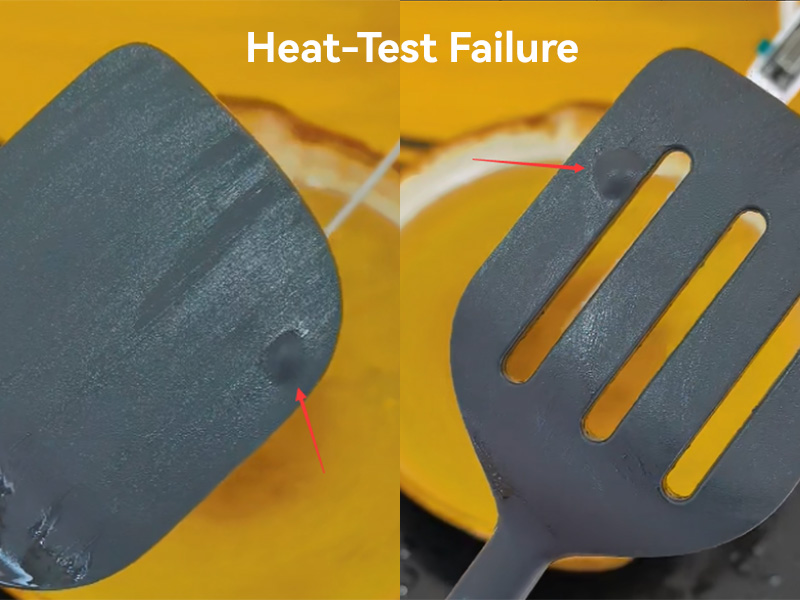
In a separate anonymized project, the buyer’s existing silicone kitchen tool failed after exposure to cooking oil at 400°F for 10 minutes.
The failure could not be treated as an isolated sample issue. It had potential implications for consumer trust, returns, complaints, product reputation, supplier onboarding, and the timing of a future market launch.
The buyer needed more than a replacement sample. The project required a clearer explanation of what had failed, why it had failed, and which design or process decisions needed to change before the next development stage.
Core Challenges
- The original test result did not identify whether the failure came from silicone, the PA66 core, or the complete structure.
- Hot oil transferred heat through the surface, internal core, overmoulding boundary, and handle connection.
- Core position, silicone thickness, head geometry, and bonding interfaces could all affect performance.
- Small separations could create cleaning and hygiene risks even if the product still appeared usable.
- A revised sample needed to be technically explainable and reproducible in mass production.
- The buyer needed more specific criteria for comparing alternative suppliers and structures.
Solution
- Redefine the failure as a structural performance problem
l-tools reframed the question from whether the product could pass a heat test to whether the complete silicone-over-PA66 construction could remain stable during prolonged exposure to high-temperature oil. This created a more useful starting point for investigation.
- Review the main failure areas
The technical review covered material heat behaviour, internal core position and support, overmoulding thickness, bonding interfaces, head geometry, stress-concentration points, handle connections, cleaning conditions, and batch consistency.
- Test alternative fully overmoulded structures
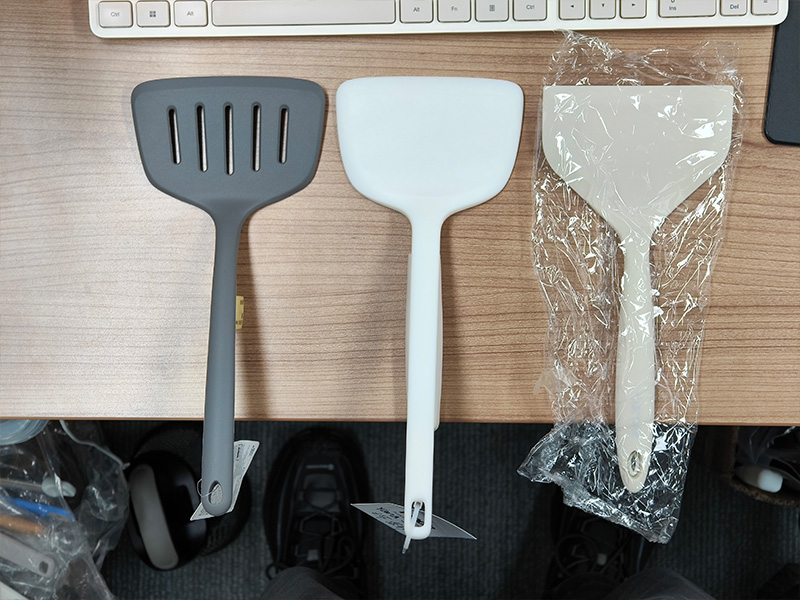
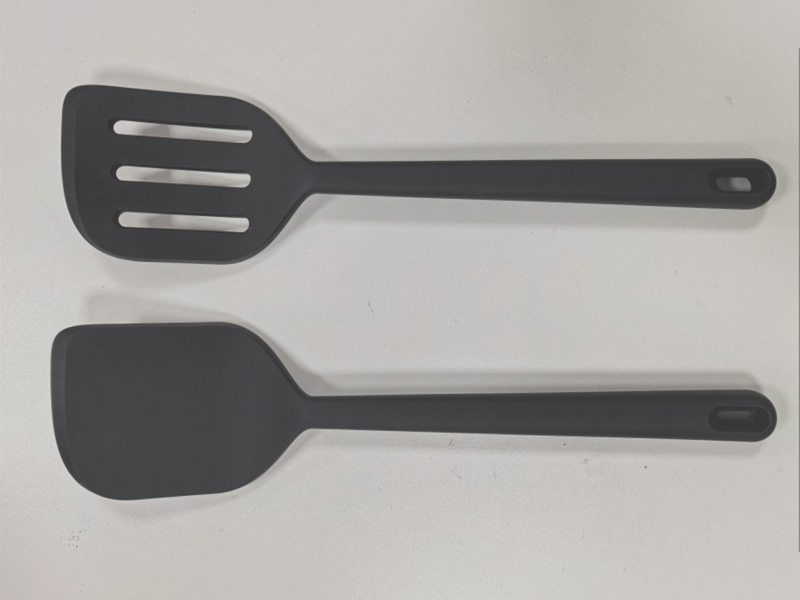
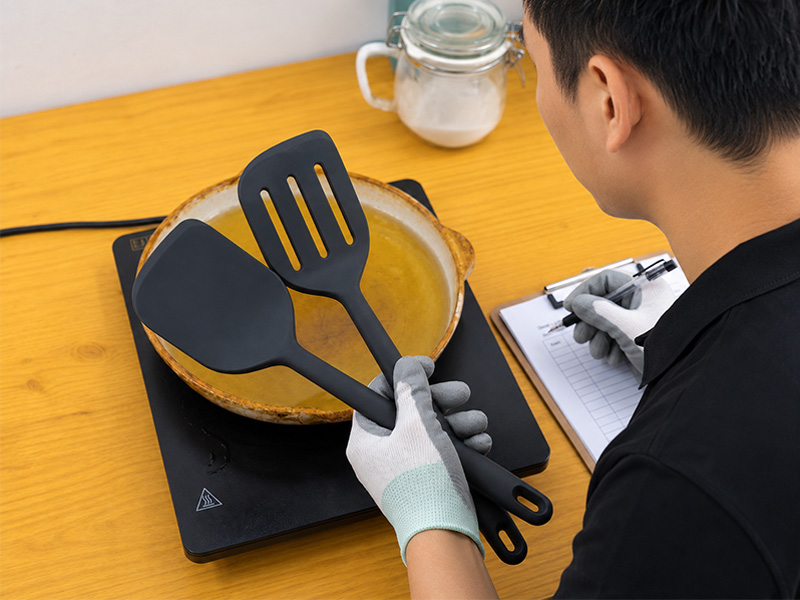
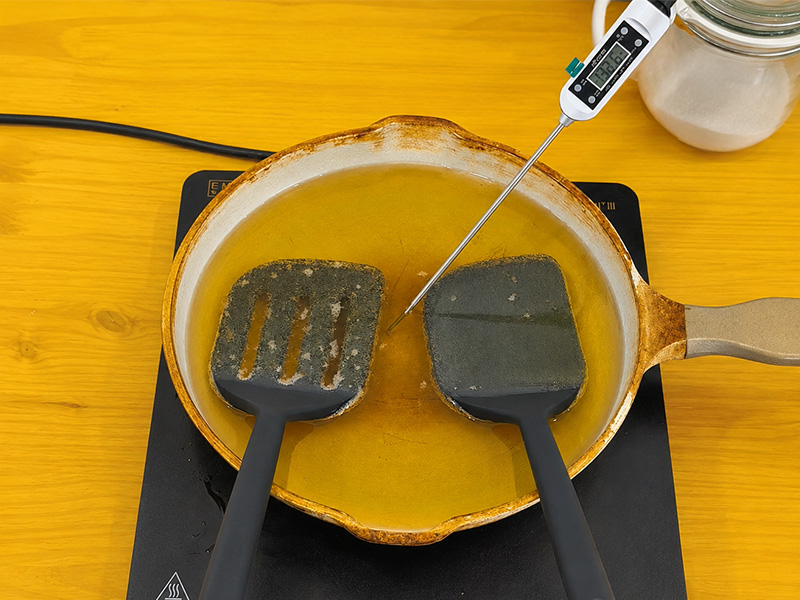
l-tools conducted internal simulation testing on a fully overmoulded slotted turner and a fully overmoulded solid turner. Both samples were exposed to cooking oil at 400°F, approximately 204°C, for 10 minutes and were checked before and after testing.
- Translate findings into product-development decisions
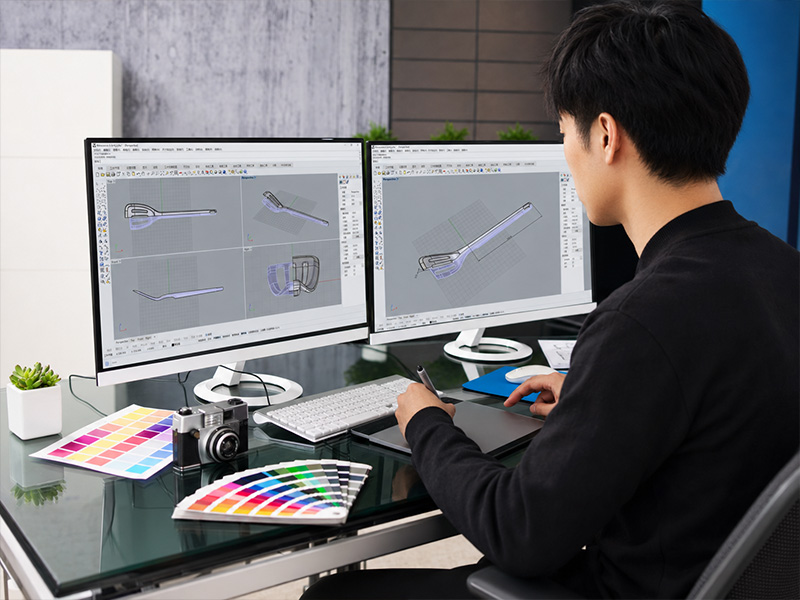
The project created a basis for comparing glue-free, auxiliary bonding, and mechanical locking approaches. It also supported decisions about material selection, core design, overmoulding thickness, head shape, and handle connection.
- Build the findings into mass-production inspection
Core position, material interfaces, colour, appearance, and connection stability were translated into practical inspection points. Heat-resistance performance and food-contact requirements remained separate but connected workstreams, and actual performance boundaries needed to be confirmed before final packaging and product claims.
Project Results
- Neither alternative sample showed visible deformation, melting, burning, blistering, cracking, silicone separation, or detachment from the internal structure under the defined internal simulation conditions.
- The buyer avoided entering another sampling cycle without understanding the earlier failure.
- Raw-material performance was separated from finished-product structural performance.
- The project provided clearer criteria for deciding whether the bonding method, internal structure, or test plan should change.
- The buyer gained a more specific technical basis for supplier comparison before further investment in moulds, packaging, and launch preparation.
Case Value
A failed heat-resistance test should not be viewed only as a failed sample. It may reveal systematic risks in materials, core design, overmoulding thickness, bonding interfaces, head geometry, connection methods, or production consistency.
The value of a manufacturing partner is not simply the ability to make a similar product. It is the ability to identify where the product may fail, convert that risk into a testable technical question, and support a verifiable improvement path before mass-production investment.