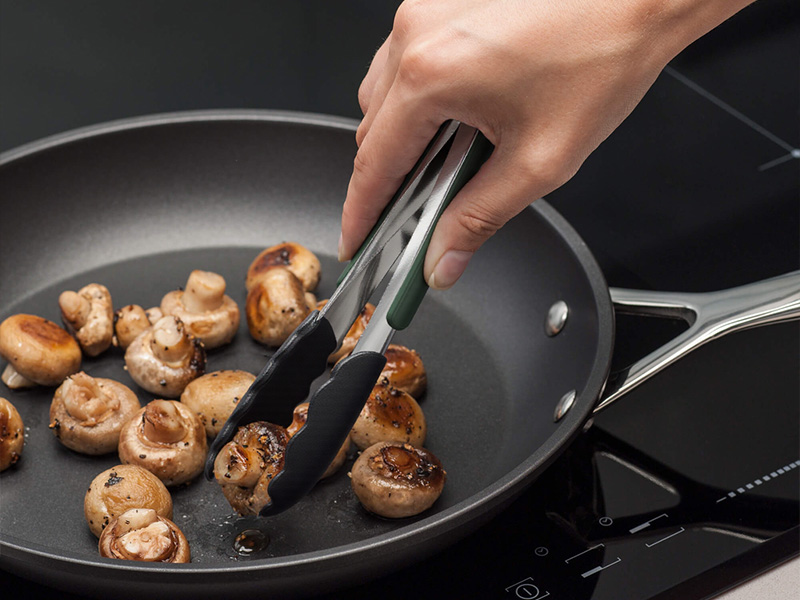
A lot of kitchen tongs feel great at the beginning.
The hinge feels tight.
The opening pressure feels smooth.
Everything lines up properly.
Then a few months later, something changes.
Not dramatically at first.
The handles wobble slightly.
The spring feels weaker.
One side closes a little higher than the other.
Most consumers won’t describe it technically. They just say the tong feels “cheap now” or “not as comfortable anymore.”
That’s usually where long-term usability starts becoming more important than first impressions.
It Usually Starts Small
Most kitchen tongs loose complaints don’t happen immediately.
That’s part of why they’re easy to miss during development.
A sample can feel perfectly fine during a quick review meeting. Open it a few times, check the finish, test the grip for ten seconds. Everything seems okay.
But real kitchens create repetitive stress.
Steam.
Oil.
Dishwasher heat.
Fast cooking movements.
Repeated opening and closing.
Small weaknesses slowly become visible there.
At L-Tools, we’ve noticed that many tong-related issues only show up after repeated use testing, especially once the product moves beyond showroom handling and into actual cooking situations.
The Hinge Quietly Carries Most of the Pressure
The hinge area looks simple, but it handles almost all the movement force.
Every squeeze transfers pressure into that one connection point.
Over time, tiny gaps can become larger:
- slight wobbling
- uneven opening resistance
- softer spring feel
- alignment shift
The tong still technically works.
It just stops feeling stable.
And consumers notice that feeling faster than many brands expect.
Especially with stainless steel kitchen tongs, where users naturally expect durability and consistency.
A Good Photo Doesn’t Always Mean a Good Tool
Some products look excellent online.
Slim profiles.
Nice silicone colors.
Minimalist packaging.
But real cooking exposes different things.
Handle comfort.
Grip pressure.
Balance during use.
Sometimes a tong looks elegant in product photos but becomes tiring during actual cooking.
Especially during longer tasks like grilling or stir frying.
One thing that comes up often during product discussions at L-Tools is how different a product can feel after twenty minutes of real use compared to a quick sample inspection.
The Dishwasher Often Makes It Worse
A lot of consumers now specifically look for dishwasher safe kitchen tongs.
And many products technically are dishwasher safe.
But repeated dishwasher exposure slowly changes materials.
Heat expansion affects metal differently than silicone. Springs gradually soften. Moisture stays around pivot areas longer than people realize.
Some hinge systems become noticeably looser after months of repeated washing cycles.
Not broken.
Just less precise.
These are the kinds of details brands usually notice later, after customer feedback starts appearing.
Some Problems Only Show Up After Months
This is probably one of the hardest parts of kitchenware development.
Many usability problems don’t appear during initial approval stages.
A product may pass:
- basic opening tests
- packaging review
- visual inspection
- short-term handling
But long-term use creates different results.
At L-Tools, some projects revealed that slight misalignment only became obvious after repeated opening cycles. Early samples still felt completely acceptable.
That’s why kitchen tong durability is harder to judge from appearance alone.
Handle Spacing Changes the Feel More Than People Think
This one sounds small, but users notice it quickly.
If the handle spacing becomes awkward over time, people subconsciously grip harder to compensate.
That creates fatigue during cooking.
Especially for:
- grilling
- buffet serving
- repetitive meal prep
- high-frequency kitchen use
Consumers rarely explain this clearly in reviews.
They simply stop reaching for the product.
Eventually the tong gets replaced by another pair that feels more natural.
Many Brands Focus on Color Before Structure
This happens a lot across the kitchenware industry.
Packaging gets heavily discussed.
Colors get revised multiple times.
Finish details receive enormous attention.
Meanwhile, structural details sometimes stay under-tested.
Things like:
- spring consistency
- pivot stability
- handle comfort
- opening pressure balance
Ironically, those are often the exact details affecting repeat purchase and long-term satisfaction.
It’s something more kitchenware teams have quietly started paying attention to.
Consumers Usually Describe the Feeling, Not the Problem
Most users won’t say:
“This product has a tong hinge problem.”
They’ll say:
- “feels flimsy”
- “became awkward”
- “doesn’t close evenly”
- “hard to control now”
The frustration is physical more than technical.
The tool no longer feels predictable during use.
And predictability is a huge part of perceived kitchen tool quality.
Consistency Matters More Than Flashy Features
A good tong usually doesn’t feel impressive.
It just feels reliable every time someone cooks.
The spring stays familiar.
The hinge remains stable.
The alignment stays consistent.
Nothing dramatic happens.
That quiet consistency matters a lot more now, especially as consumers become more sensitive to long-term usability instead of just first impressions.
Some projects working with L-Tools revealed that very small structural adjustments sometimes improved product feel more than completely redesigning the appearance.
The Difference Between “Okay” and “Reliable” Is Often Very Small
That’s probably the interesting part.
Sometimes the difference between an average tong and a trusted everyday kitchen tool is surprisingly subtle:
- slightly better hinge control
- more balanced spring pressure
- cleaner alignment
- less grip fatigue
Small details.
But after hundreds of cooking sessions, those details shape how people remember the product.
And honestly, most consumers may never consciously think about hinges or spring systems at all.
Until one day the tong simply doesn’t feel right anymore.
That’s usually when long-term product quality becomes impossible to ignore.