

Choosing among baking sheet sizes looks simple until a buyer must turn a name such as “half sheet” into a repeatable product. Small dimensional differences can affect oven fit, packaging, and accessory compatibility.
For an OEM/ODM project, size is only the starting point. Material, thickness, rim construction, surface finish, testing, and market requirements must work together before sampling.
This guide is for product managers, sourcing teams, importers, and retail buyers developing private-label ranges. It shows how to move from market terminology to a specification that suppliers can quote, test, and reproduce.

Executive Summary: Size Decisions Before Sampling
A full, half, or quarter sheet name helps compare formats, but it does not define every dimension. Pans with the same name may differ in outside measurements, bottom area, rim profile, or nesting clearance.
From our project experience, we first ask whether the product is intended for a home or commercial kitchen. Oven cavities and heat distribution differ, so size, material, and thickness should be considered together.

Key sourcing decisions include oven compatibility, usable baking area, thermal stability, finish, and packaging efficiency. Buyers should also decide whether the pan will be sold alone, in a set, or with a rack or mat.
A controlled project moves from the product brief to drawing, sample, functional validation, Golden Sample, pilot production, and final inspection. Agreeing on these stages early can reduce revisions.
Baking Sheets, Cookie Sheets, and Baking Pans
A baking sheet or sheet pan normally has a shallow rim on four sides. A cookie sheet is a flatter piece for baking and usually has only one or two raised edges, while a baking pan is a deeper vessel for batter or liquids; these are the basic distinctions, and a sheet pan and cookie sheet are the most common formats in this category.
These names describe product families, not complete engineering requirements. When reviewing a bakeware collection or B2B baking pan sourcing guide, buyers should still confirm the drawing, material, intended use, and test criteria.
Standard Baking Sheet Sizes
Standard size names are purchasing references, not universal engineering drawings.
The table uses common nominal dimensions. Actual products can vary with rim geometry and supplier tooling.
| Size | Nominal dimensions | Approximate millimeters | Typical fit |
|---|---|---|---|
| Full | 18 × 26 in | 457 × 660 mm | Commercial ovens |
| Two-Thirds | About 15 × 21 in | 381 × 533 mm | Larger ovens |
| Half | 13 × 18 in | 330 × 457 mm | Residential and half-size equipment |
| Quarter | 9.5 × 13 in | 241 × 330 mm | Small batches or compact ovens |
| Eighth | 6.5 × 9.5 in | 165 × 241 mm | Portioning or compact appliances |
Quarter is also commonly called a quarter, a quarter sheet, or a quarter sheet pan; many buyers also refer to quarter sheet pans as a practical choice for small-batch prep, roasting, or chilling. In practice, the size matters as much as the label, because the size of each format affects handling and fit, and the usable area of the pan can vary with rim shape.

The ENERGY STAR commercial oven definitions use 18 × 26 × 1 inches for a full-size pan; in other words, a full sheet is 26 × 18 and is usually not suitable for home ovens. Other formats require separate checks.
Inside, Outside, and Usable Dimensions
A pan’s maximum outside dimensions determine oven, rack, carton, and shelf fit. The inside top opening measures the space within the rim, while the bottom dimensions describe the flat area.
The usable baking area is smaller than the named size. Sloped walls, rolled rims, reinforcing wire, and corner radii consume space, so each measurement should appear separately on the drawing.
Tolerances should follow function. Oven fit, rack fit, accessory matching, and nesting are critical-to-fit dimensions; less sensitive features may use broader tolerances agreed with the supplier.

Oven Compatibility by Market
North American foodservice equipment commonly uses full and half sheet classifications. Residential ovens often accept smaller pans, with common sizes better suited to home kitchens, but external appliance width cannot confirm internal clearance.
European professional equipment may use EN 600 × 400 mm, GN 1/1, or manufacturer-specific formats. The Smeg Professional tray formats show why a regional label alone is insufficient. If you are specifying pans for the residential market, verify real cavity clearance rather than relying on nominal appliance width.
Before tooling approval, place a production-equivalent sample in the intended oven and rack. Confirm side clearance, airflow, rail engagement, door closure, and safe removal under a realistic load, since sizes meant for residential use should also work well for home cooks and the people handling them every day.
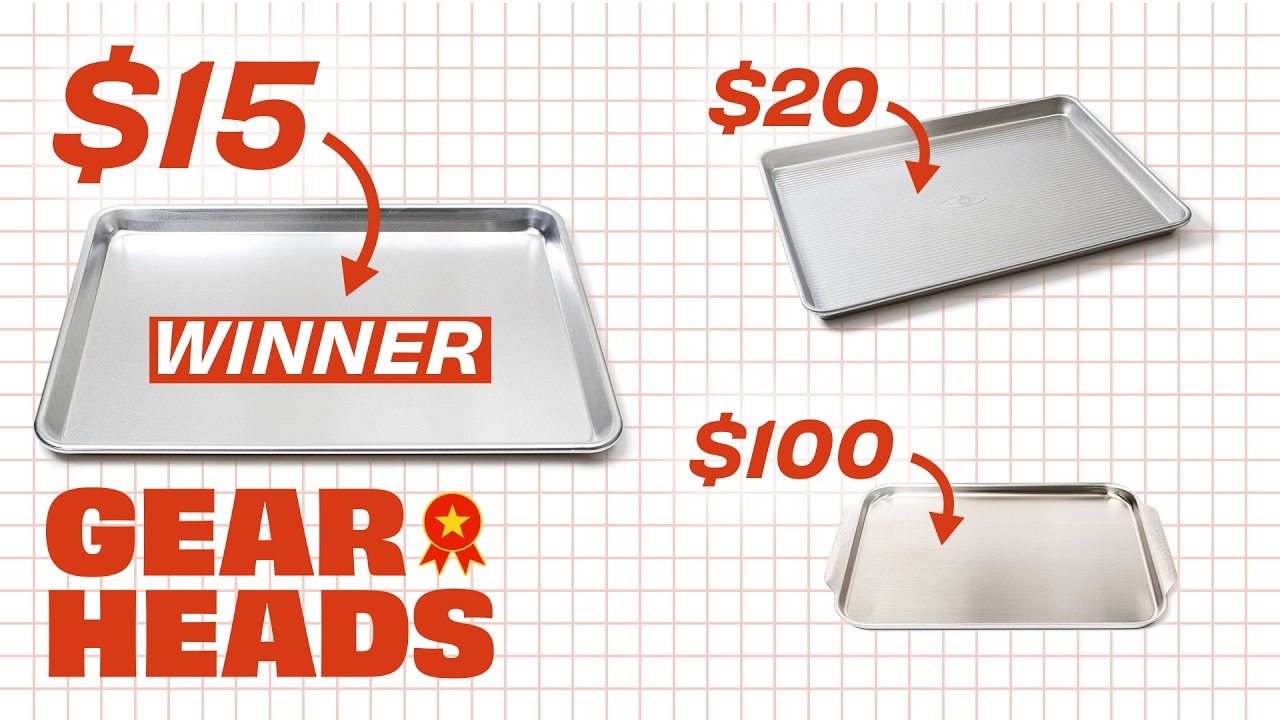
Half Sheet Pan Sourcing Checklist
A half sheet pan specification should begin with controlling dimensions, not the product name. Record outside dimensions, bottom area, rim height, thickness, weight, and measurements affecting racks, mats, or packaging.
Specify thickness in millimeters and treat gauge as a secondary reference, because conventions vary by material. The drawing should identify the alloy or steel grade, rim profile, reinforcing wire, finish, and permitted edge condition.
Flatness needs room-temperature and heated criteria. Define the test temperature, load, cycle time, cooling method, and permitted permanent warp, then label each sample with its part number and drawing revision.
Cookie Sheets vs. Baking Sheets
A baking sheet normally has a shallow rim on four sides, improving rigidity and containing loose food. A cookie sheet may have one raised edge or no full rim, which suits baking cookies and helps cookies slide off more easily.
Construction also changes handling. The open-sided design reflects the idea of improving airflow and making baked items easier to release. Rimmed pans can feel more stable under load, while open-sided sheets need suitable grip areas and enough stiffness to resist twisting during removal.
For storage and retail sets, check nesting clearance and release. Tight nesting makes pans difficult to separate, while direct surface contact may scratch coatings during transport. After baking, transfer finished items to a cooling rack to cool faster and reduce moisture under the base.

Materials and Surface Finish Options
Aluminum responds to heat quickly and keeps the pan relatively light. Stainless steel heats differently, while aluminized steel combines a steel base with an aluminum-coated surface and may provide greater structural rigidity.
Material choice should reflect the baking task, oven environment, weight target, price level, and cleaning method. Different pans are better suited to different production and baking needs, and some surface options have a different release and cleaning profile. Buyers comparing baking pans and molds should avoid selecting a substrate from appearance or unit price alone.
Natural, anodized, and nonstick surfaces create different requirements for release, cleaning, appearance, and durability, so when choosing a baking pan, consider both material and color because color also affects visual positioning and can influence some baking results. For coated products, define the coating system, use temperature, color, cure condition, adhesion criteria, and abrasion test before sample approval.

Manufacturing Routes and Tooling Control
Manufacturing should follow the pan geometry and forecast volume. Stamping suits repeatable high-volume forms, while roll-forming may support selected rim constructions; deeper profiles may require drawing operations and more substantial tooling.
Before opening a new tool, compare the proposed dimensions with available tooling. Record tool ownership, identification, approved drawing, expected life, maintenance intervals, and wear parts so later production does not depend on undocumented adjustments.
Any change to the tool, material, thickness, coating, or production location should enter written revision control. A change that affects form, fit, function, or compliance requires review and, where necessary, new validation.
Process diagram: Blank cutting → stamping or drawing → rim forming → deburring → surface preparation → coating and curing → inspection.
Performance Validation Before Approval
Dimensional approval alone does not prove oven performance. Test a production-equivalent sample using a defined oven type, temperature, rack position, load, heating time, cooling method, and number of cycles.
Record temporary movement during heating separately from permanent warp after cooling. The same program can check browning consistency, loaded handling, coating release, cleaning resistance, nesting, and accessory fit; avoid overcrowding the pan during these tests, because it reduces even cooking and browning consistency, and use enough surface area for the product to spread and heat properly. Validation should be based on target recipes or representative loads rather than empty-pan testing.
Link every result to the sample part number and drawing revision. A controlled kitchenware sampling process should lead to an approved Golden Sample rather than an unnumbered reference kept informally.

Quality Control and Food-Contact Documentation
Incoming inspection should confirm material grade, thickness, surface condition, and coating batch. Final inspection should cover critical dimensions, flatness, rim closure, sharp edges, coating appearance, markings, and packaging.
Classify defects before choosing an AQL plan, then connect each finished lot to its materials, coating, production date, and inspection record. Nonconforming goods need quarantine, disposition, corrective action, and documented release.
Food-contact documentation should match the substrate, coating, intended temperature, food type, and destination market. The FDA food-contact substance requirements show why buyers need use-specific evidence, not a generic “FDA certificate.”
Costing and Packaging by Channel
Compare more than unit price. Material, thickness, coating, tooling, testing, packaging, freight, and duties shape the landed cost of each SKU.
Retail packs must protect edges and show size clearly. Foodservice formats prioritize case quantity, separators, nesting release, carton strength, pallet efficiency, and handling weight; this kitchenware packaging guide explains the retail impact.

Assortment Planning and Project Milestones
Build the range around its intended kitchen and channel. A focused launch may combine a core half sheet, a complementary pan, and one feature separating value and premium tiers.
Move each SKU through a controlled sequence: brief, drawing, quotation, sample, testing, Golden Sample, pilot production, final inspection, and shipment release. Define deliverables and approval owners at each stage.
Project timeline: Product brief → drawing → quotation → sample → testing → Golden Sample → pilot production → final inspection → shipment.
Common Development Mistakes
Common mistakes include approving only a size name, finalizing artwork before packaged dimensions, or reducing material and coating specifications without retesting. These shortcuts can create fit, performance, compliance, or cost problems later.
Buyer FAQ
Are all half sheet pans identical? No. Nominal names are useful references, but outside dimensions, bottom area, rim geometry, and tolerances vary.
What is the common size of a quarter sheet pan? A quarter sheet pan is typically about 9 × 13 inches. For small batches or ingredient prep, you can use it for everyday recipes, while larger formats are often preferred for sheet pan dinners.
I have an existing pan—how do I confirm its size? Measure the outside dimensions from edge to edge, rather than only the interior base, and compare them with standard references. This is especially helpful when choosing between quarter and half formats for baking.
When is new tooling required? When existing tools cannot achieve the requested dimensions, profile, edge construction, or performance consistently.
What supports an accurate quotation? Share the target market, intended use, dimensions, material, finish, quantity, packaging format, testing needs, and delivery terms.
What is the difference between a half sheet pan and a jelly roll pan? The main difference is in rim depth and overall pan sizes. For baking, a jelly roll pan is made for thin sponge-based desserts such as jelly roll and other rolled cakes, and jelly roll pans commonly measure 10 × 15 inches or 12 × 17 inches, while a half sheet pan is larger.
From Size Selection to a Production-Ready Specification
The right baking sheet connects size, oven compatibility, material, construction, testing, packaging, and channel strategy. Defining these elements early helps buyers compare quotations and reduce revisions.
Planning Your Next Baking Sheet Range
Explore the bakeware capabilities of l-tools or contact our team with your market, oven type, preferred sizes, materials, volume, and packaging requirements. We can review the brief and discuss next steps for sampling and quotation.