Introduction
Choosing the best rotary cheese grater requires more than checking how finely it grates hard cheese. Brands and retailers also need to consider safety, cleaning, storage, output consistency, compliance evidence, and whether the product fits a clearly defined retail position.
Drawing on our OEM/ODM product-development experience, this guide evaluates rotary, box, handheld, flat, and foldable graters through criteria that procurement teams can verify. A product that looks convincing in a sample photo may still create inconsistent performance, unsupported packaging claims, returns, launch delays, or avoidable inventory risk.
You will learn how to define food scenarios, compare blade processes, test complete samples, review compliance documents, and prepare a practical quality-control plan. The selection framework below starts by matching each grater format to the job it should perform.
Buyer Selection Framework
Start with the primary food application, required output, frequency of use, target customer, cleaning method, storage limits, and intended price tier. These decisions should come before appearance, packaging, or unit-price comparisons.
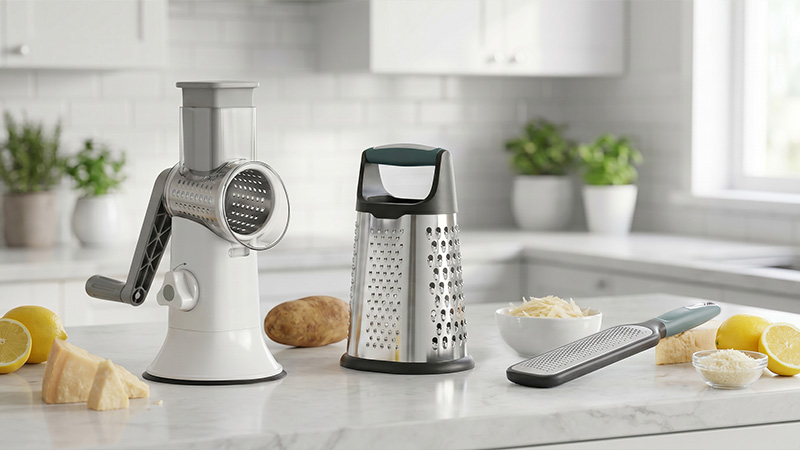
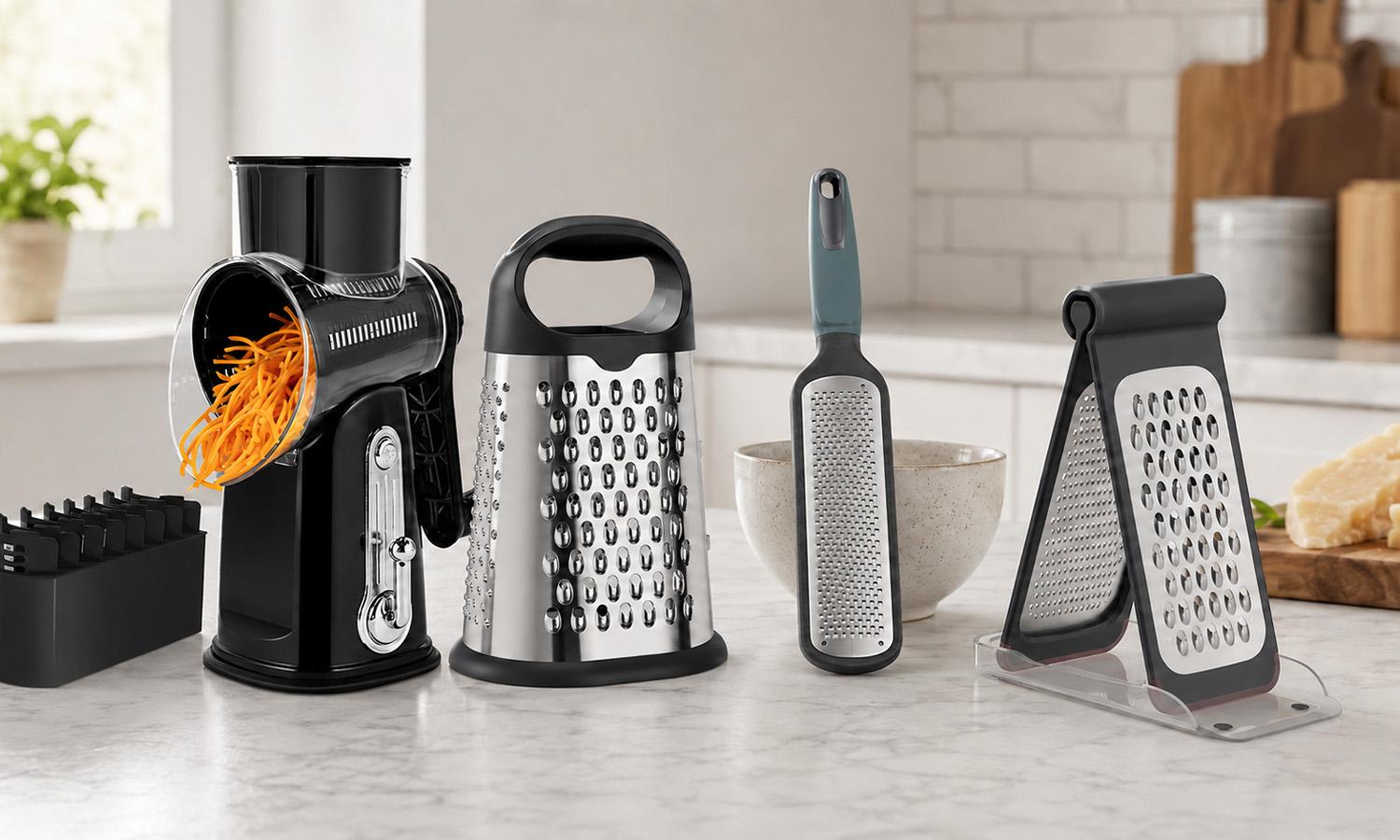
Choose a rotary cheese grater when the main applications include refrigerated hard cheese, pasta or pizza toppings, salads, table service, or enclosed grating. Its drum structure can support directional output and greater separation between the user’s fingers and the cutting surface.
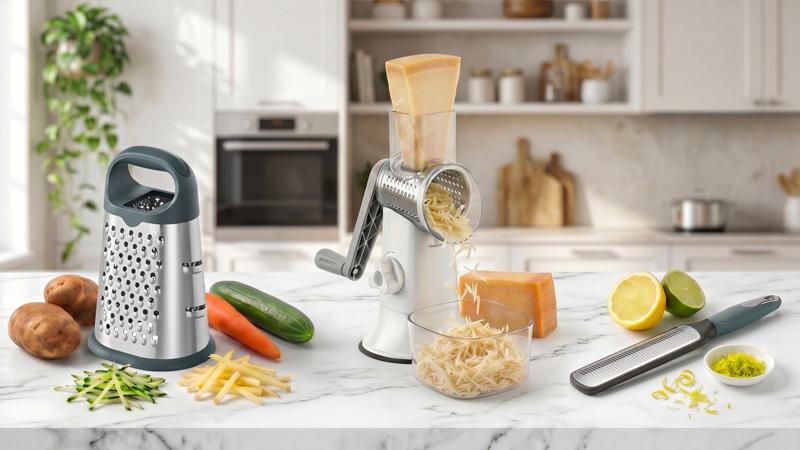
Choose a box grater when one product needs to shred, grate, slice, or zest several foods, with a dedicated zester side for citrus. It can serve as a core kitchen tool for cheese, carrots, potatoes, zucchini, cabbage, chocolate, and citrus when every advertised surface performs correctly.
Choose a handheld or flat grater when precision finishing, compact storage, or an accessible entry price matters most. These formats, including a rasp grater or zester, suit citrus zest, ginger, garlic, nutmeg, chocolate, and fine cheese, but they are less suitable for high-volume preparation and are easy to use for light, small-batch tasks.
A buyer should confirm the format through controlled sample testing before approving purchase quantities or retail claims. Review the relevant cheese grater product range only after the product brief defines the required food result.
How This Guide Evaluates Cheese Graters
This guide uses a brand-neutral evaluation method based on function, cutting performance, output quality, stability, user comfort, cleaning access, material durability, compliance needs, and retail positioning. It does not assume that a higher price or more complex appearance guarantees better performance.
For original equipment manufacturing and original design manufacturing projects, OEM/ODM evaluation must cover both the end-user experience and sourcing risk. Blade geometry, material thickness, assembly tolerance, packaging claims, and quality-control limits must remain consistent from the approved sample through production.
From our work with overseas brands and retailers, one recurring first-purchase mistake is choosing a structure before defining the real food-preparation scenarios. We first confirm whether the product must process cheese, chocolate, truffles, vegetables, coarse shreds, fine particles, or thin slices, and then determine the blade pattern, cutting thickness, sharpness, and industrial design.
This sequence converts general words such as “sharp” and “multi-purpose” into measurable acceptance criteria. It also gives the buyer, supplier, product manager, and inspector a shared basis for approving samples and resolving production differences.
Rotary Cheese Grater Performance
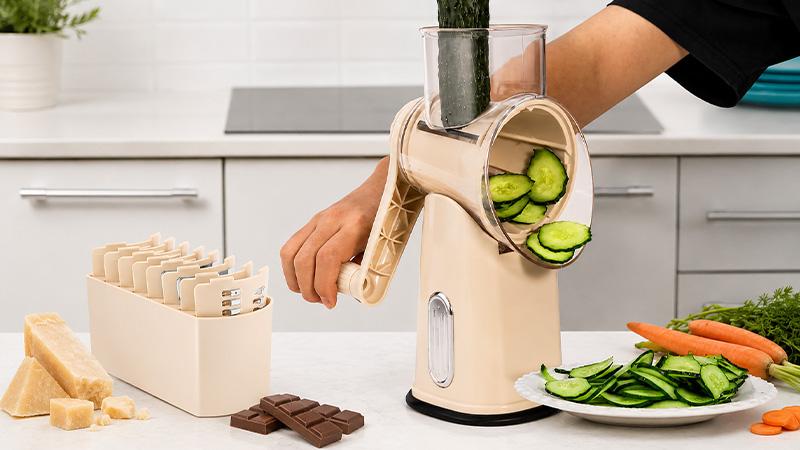
A rotary model, or rotary grater, should deliver consistent output with manageable effort and real ease in use. Buyers need to evaluate the drum, chamber, pressure plate, crank, and handle as one loaded system because acceptable individual parts can still perform poorly after assembly.
Hard Cheese Cutting Test
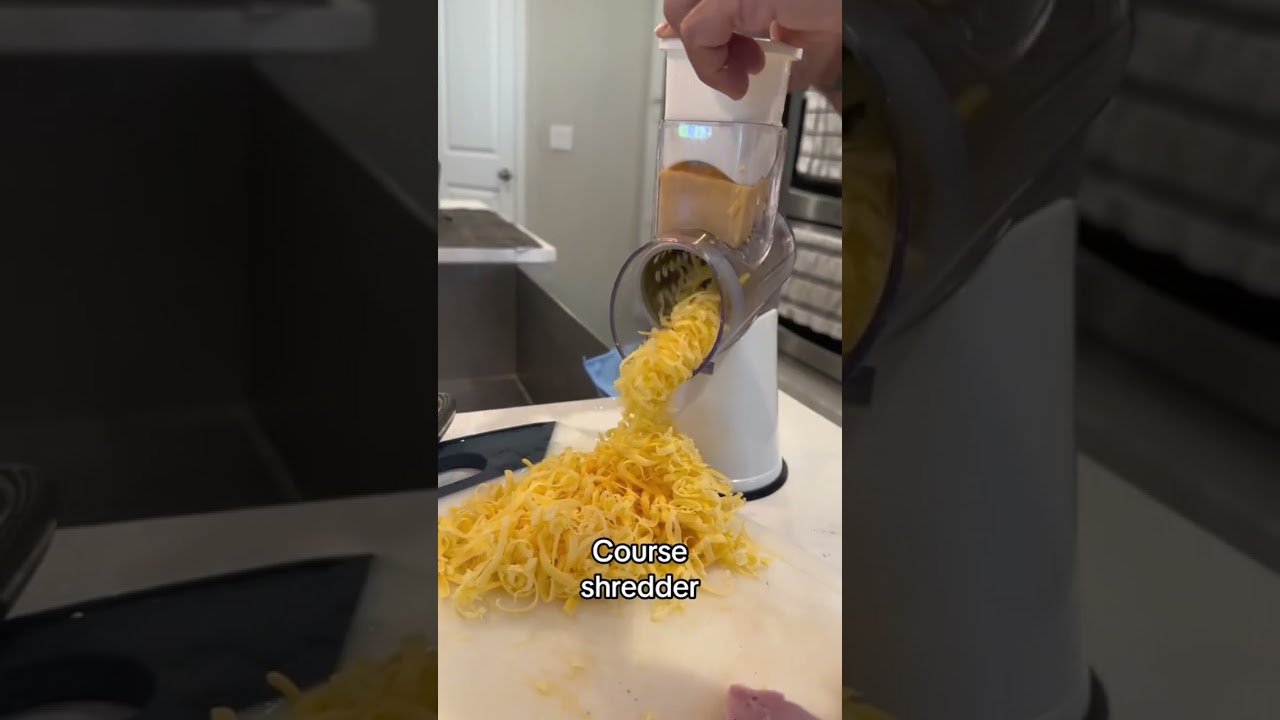
Use refrigerated hard cheese such as parmesan as the primary performance benchmark unless the product brief specifies another core food. Hard cheese quickly reveals weak cutting edges, poor feeding alignment, uneven rotation, chamber clogging, and excessive residue.
Keep the cheese batch, temperature, starting weight, block dimensions, operator, number of rotations, and cleaning condition consistent. A practical internal comparison may use a 50-gram starting sample from a block of cheese, but the buyer should document this as an internal method rather than present it as a universal standard.
Record usable output, unprocessed food, visible crushing, trapped residue, processing time, changes in resistance, and how consistently the unit performs to grate the sample. Test multiple units so that the approval reflects repeatable production performance, not one hand-selected prototype.
Inspect the drum and crank after repeated operation. Scraping, lateral wobble, loosening, deformation, or contact between the drum and housing may indicate poor alignment or insufficient durability.
Safety, Cleaning, and Storage
The enclosed structure should keep fingers away from the drum during normal loading and rotation. Inspect the feed opening, pressure plate, closing motion, and handle connection for unintended cutting edges or pinch points.
Buyers should disassemble the product according to its instructions and inspect the drum holes, hopper corners, pressure plate, handle joint, and housing for trapped food to clean each area thoroughly. Tool-free disassembly can improve daily cleaning when the components remain secure during use, and smaller parts can be checked more easily when removed.
If the product supports refrigerated storage, the cover or container should close securely, remain stable over a flat surface, and use materials suitable for the intended food contact. Do not promote the grater as a storage container unless the complete storage configuration has been reviewed and tested.
These checks should be completed before finalizing a rotary cheese grater product or its packaging claims.
What Makes a Good Box Grater?
A box grater usually offers a broader preparation range than an enclosed rotary model. Its usefulness, however, depends on whether some of the working surfaces produce a distinct and repeatable food result, since not every side performs equally well and buyers should verify each surface separately.
For retailers, multiple functions can create a clear shelf proposition across entry, mid-range, and premium tiers, making a box grater a practical option for certain assortment levels. For brands, key design features such as blade layout, handle construction, base stability, containers, surface treatment, and packaging provide practical areas for differentiation.
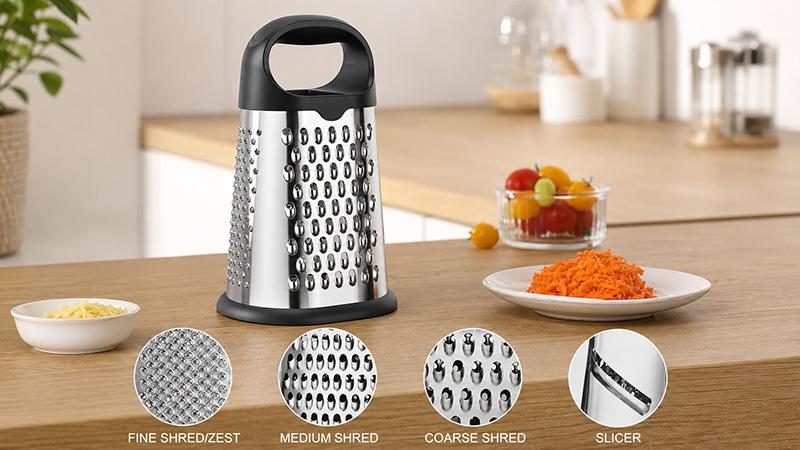
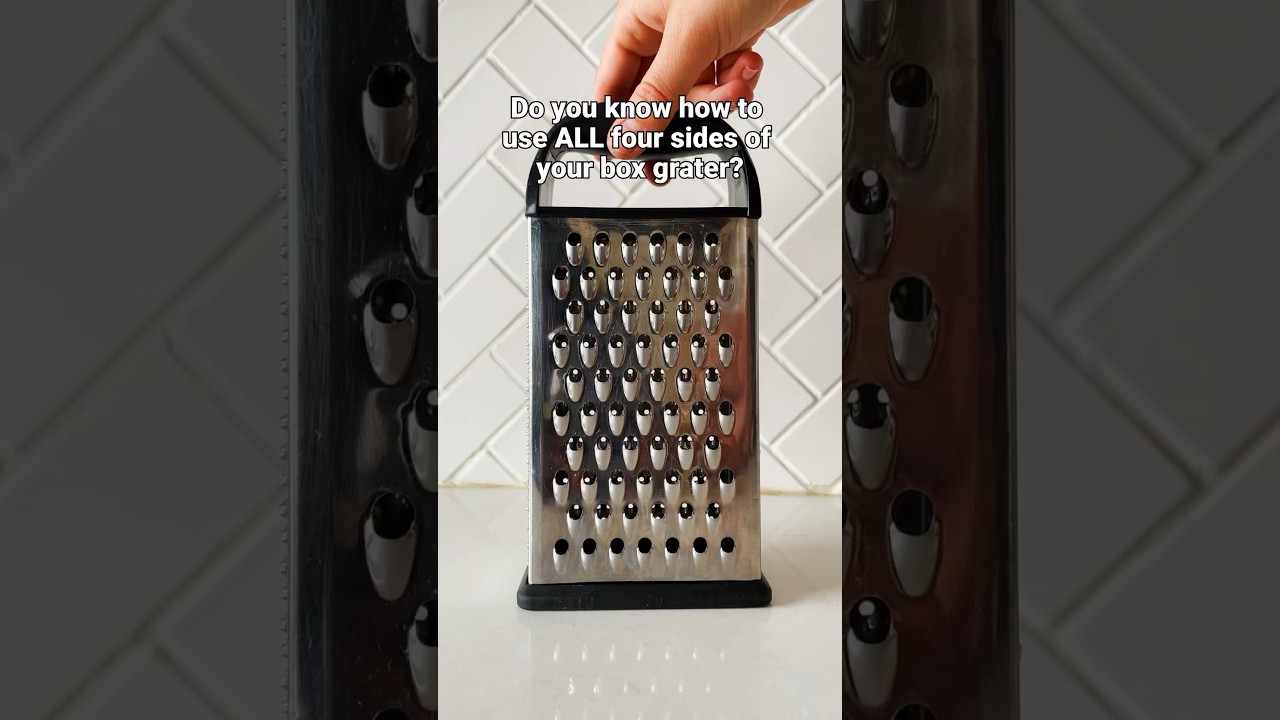
Four Working Surfaces
The coarse surface should produce clean, separated shreds from approved foods such as cheese, carrots, zucchini, or potatoes for uses like hash browns. Reject samples that crush the food, release excessive liquid, clog rapidly, or leave excessive residue.
The fine surface should create smaller usable particles from the foods named in the brief. It should not produce an uncontrolled mixture of powder, paste, and oversized fragments unless that texture is intentionally specified.
The slicing surface should cut with manageable pressure and produce slices within an approved thickness range. Buyers can measure several samples with calipers and record the variation instead of relying only on visual judgment.
The zesting surface should remove citrus peel cleanly to a shallow depth without repeatedly cutting into the white pith; while it can handle some tasks associated with zesters, it is not a full substitute for a dedicated tool. Any additional claim for hard cheese, chocolate, ginger, or spices requires a separate food test.
Blade Manufacturing: Punched and Etched Openings
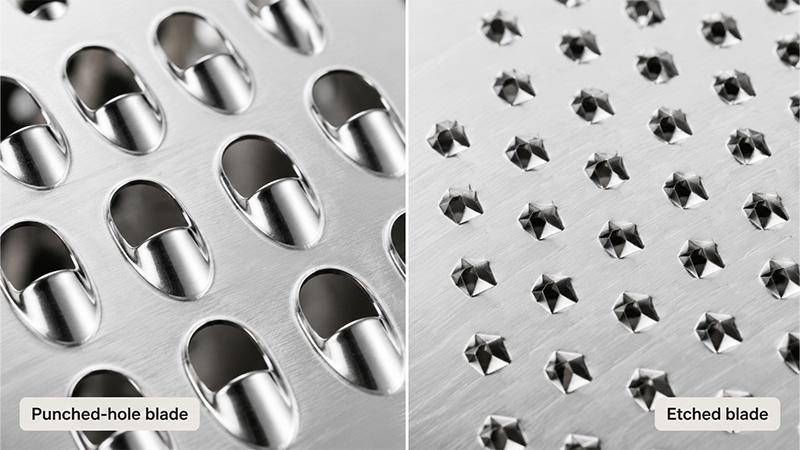
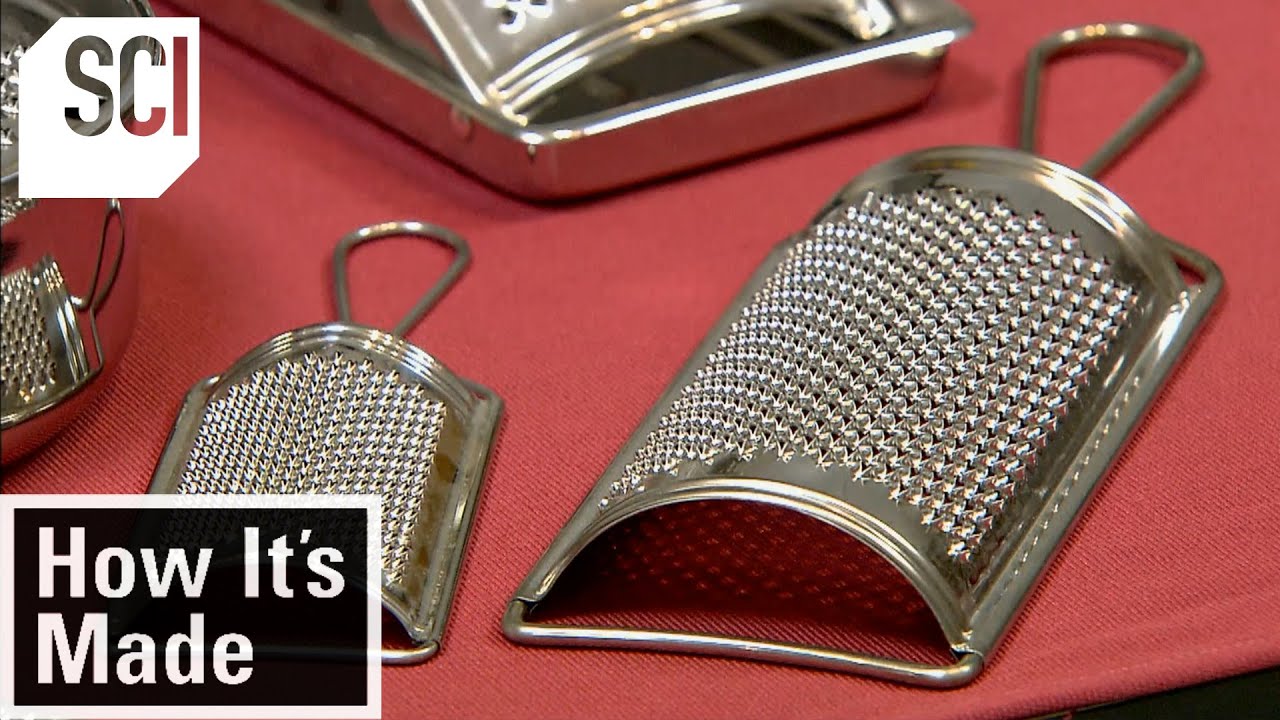
From our factory-development experience, similar-looking graters can deliver very different cutting performance because of the method used to form and finish the openings. Tool condition, edge formation, surface treatment, and process control all affect the result.
Conventional punched openings are cost-effective and common in mass-market products. Poor tooling or finishing can create inconsistent burrs and weaker edges, although a well-controlled punched blade may still outperform a poorly made alternative.
Chemical or photo-etched processing can create finer, more precise cutting edges when the supplier controls the process correctly. It uses different equipment and quality controls, which may influence tooling, sampling time, unit cost, and retail position.
The process name alone is not proof of quality. Buyers should compare actual food output, required effort, edge consistency, and production repeatability before selecting a blade method.
Approve a 4-sided box grater product only after the specification identifies the purpose of a side, material, thickness, blade process, output, and acceptance limits for every advertised side.
Stability, Handle, Container, and Storage Design
Stability and Handle Qualification
A box grater experiences downward and lateral forces during repeated strokes. Test it on representative laminate, stone, and cutting-board surfaces using the same load and motion on dry and lightly damp conditions.
Record sliding distance, rocking, twisting, base deformation, and damage to the anti-slip insert. The base should provide stable support without scratching the test surface or peeling away after washing and repeated use.
Handle comfort depends on shape, thickness, texture, clearance, and the force required by the format, because these details directly affect how comfortable the tool is to use. Use testers with different hand sizes and grip strengths, and rate comfort, control, pressure points, and perceived security with one consistent scale.
A single-material grip may suit an entry-level product, while a multi-material grip may support a higher position, especially when the ergonomic intent follows the familiar OXO Good Grips style rather than acting as a brand recommendation. Buyers should still test bonding strength, wet-hand control, discoloration, odor, and washing resistance rather than treating appearance as proof of quality.
Container and Measuring Design
A removable container should have a clear collection, measuring, or storage purpose for grated items. Poor fit can cause accidental release during use or make the container difficult to remove after food accumulates inside.
Perform repeated insertion, removal, and retention tests with the container empty and filled to its intended capacity. Verify measurement marks with calibrated equipment and inspect fit changes, leakage, deformation, and cleaning access after washing.
Avoid adding a container only to increase the feature count. A component that does not improve real use may increase tooling cost, packaging volume, assembly work, and cleaning complaints.
Frontline Example: A-Frame Foldable Grater
In a project for a German customer, the brief required stable preparation, several blade functions, an integrated food container, and compact storage. The customer also wanted a meaningful improvement over familiar products already in the market.
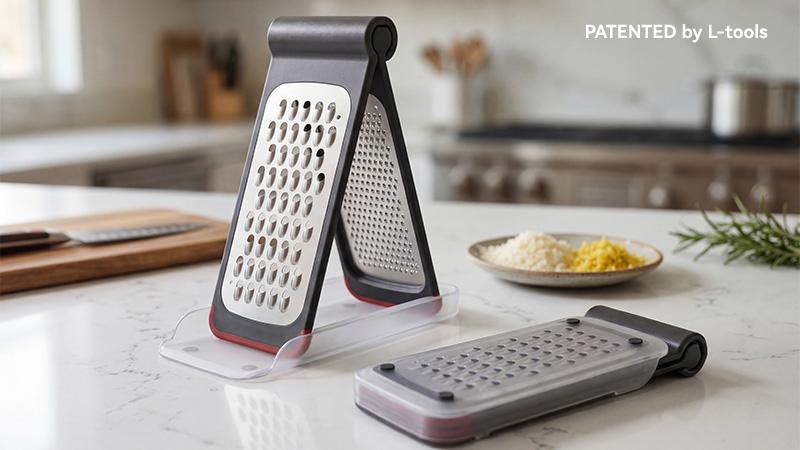
After several design reviews and functional tests, we developed an A-frame foldable grater with a top grip and two working blade panels. When opened, the panels formed a stable structure and directed the processed food into the container below.
After use, the panels folded flat and fitted inside the container. The final design treated the container as part of the working and storage system, rather than adding it only for appearance.
Box Grater vs. Rotary Cheese Grater: Key Differences
Both product types are useful, but they solve different kitchen problems.
A box grater is better for manual multi-purpose preparation, though it does not replace a food processor. A rotary cheese grater is better when users want enclosed, controlled, and safer grating, especially for hard cheese, if you’re looking for more efficient table-side use.
Different product types also handle different cheeses better, especially across softer textures and harder aging styles.
| Product Type | Best For | Main Strength | Buyer Note |
|---|---|---|---|
| Rotary Cheese Grater | Hard cheese, pasta topping, table service | Safer enclosed grating | Test drum sharpness and cleaning access |
| Box Grater | Cheese, vegetables, potatoes, chocolate | Multi-purpose food preparation | Test every blade side, not only the coarse side |
| Handheld Grater | Citrus zest, garlic, ginger, fine cheese | Precise finishing | Best as an add-on product, not a full replacement |
| Flat Grater | Simple cheese or vegetable grating | Low cost and compact storage | Good for entry-level retail lines |

Standardized Performance Testing
Visual inspection cannot confirm cutting performance or user effort. Before comparing suppliers, keep the food batch, temperature, starting weight, operator, number of strokes or rotations, test surface, and cleaning condition consistent.
| Component | Test Food | Controlled Action | Results to Record |
|---|---|---|---|
| Rotary drum | Refrigerated hard cheese | Fixed rotations | Yield, residue, clogging, resistance |
| Coarse side | Carrot or hard cheese | Fixed strokes | Shred size, crushing, liquid, effort |
| Fine side | Hard cheese or chocolate | Fixed strokes | Particle range, powder, clogging |
| Slicing side | Potato or zucchini | Fixed strokes | Thickness range, tearing, incomplete cuts |
| Zesting side | Citrus peel | Fixed strokes | Zest yield, pith, clogging |
Output Uniformity
Measure sharpness through observable cutting results, not by touching an exposed edge. Compare usable output with the starting weight, inspect remaining food, record processing time, and note whether the blade cuts, tears, or crushes.
Uniform output does not mean that every particle must be identical. It means the result stays within an approved size and texture range for shreds of cheese, without excessive powder, oversized fragments, crushed food, or unusable residue.
Spread a measured output sample on a contrasting grid and photograph it under consistent lighting. For sliced food, measure several pieces and record the thickness range and incomplete-cut rate.
User Effort, Noise, and Tactile Feedback
If equipment is available, use a force or torque gauge to compare operating effort you can. Otherwise, use the same blinded user panel and rating scale for effort, comfort, control, vibration, stability, and perceived smoothness.
For rotary graters, record catching, handle wobble, chamber movement, scraping, and changes in resistance. For box graters, assess base movement, panel flex, handle pressure, and control during repeated strokes.
Define acceptable sound and tactile behavior in the approval record. Unexpected clicks, dragging, tearing, sudden release, or metal contact should become traceable observations, not vague comments such as “it was off” or that the sample “feels wrong.”
Test several units and identify each sample in the record. Photographs, videos, measurements, and user ratings provide a repeatable benchmark for product managers, engineers, and production inspectors.
Durability and Material-Thickness Testing
A sharp prototype can still fail if its structure changes during repeated use. Measure stainless steel thickness at defined points with a calibrated gauge, record the range, and compare it with the drawing rather than relying on a nominal material description.
The test plan should define the applied load, operating motion, number of cycles, and inspection intervals according to the intended product position. Record panel bending, handle looseness, drum wear, joint movement, base separation, and permanent deformation throughout the test.
For box graters, apply representative loads to the handle, blade panels, base, and any container connection. For rotary models, check the crank, drum shaft, pressure plate, hopper joint, and removable-part locks after repeated rotation under load.
Acceptance criteria should state the permitted dimensional change and identify defects that require rejection. Cracks, detached components, exposed unintended edges, unstable bases, or significant changes in rotation should not be hidden inside a general description such as “acceptable after testing.”
Test several units from the proposed production process because one development sample cannot show normal variation. A durability result becomes useful only when it is repeatable, documented, and linked to sample identification.

Materials, Cleaning, and Supported Claims
Selecting Materials and Handle Construction
Material selection should reflect food contact, structural load, cleaning conditions, target cost, and product position. The specification should identify stainless steel grade and thickness, plastic resin, color, coatings, soft-touch materials, adhesives, and components supplied by approved sources.
Measure sheet thickness at agreed points and check panel rigidity under the intended load. A thicker panel does not automatically cut better, but insufficient rigidity or inconsistent thickness can affect stability, blade alignment, and perceived quality.
Test handles with dry and wet hands and inspect multi-material grips after washing and aging. Soft-touch material should remain secure, cleanable, and free from unacceptable odor, stickiness, or color transfer.
Cleaning and Dishwasher-Safe Validation
Create a component-level cleaning plan for blades, drums, hoppers, pressure plates, handles, bases, and containers, so the product is also easy to clean in real use. The plan should identify removable parts, hand-wash components, residue-prone gaps, and any recommended cleaning brush.
A dishwasher-safe claim should state whether it applies to the complete product or selected parts. Record the dishwasher program, temperature, detergent, cycle count, rack position, and inspection intervals used for validation.
After testing, inspect corrosion, discoloration, deformation, loose bonding, retained odor, changes in fit, and blade performance. Do not approve the claim simply because the product uses stainless steel or dishwasher-resistant plastic.
Food-contact compliance and dishwasher durability are separate requirements. For EU projects, the European Commission’s food-contact materials guidance provides an official overview of the applicable framework and good manufacturing requirements.
Care instructions should recommend prompt rinsing after foods that can dry inside small openings for this grater. They should also provide detailed hand-washing and blade-protection advice appropriate to the product structure.
Objective statements such as “dishwasher safe,” “stable base,” or “smooth rotation” need evidence. Brands selling in the United States can review the FTC Policy Statement Regarding Advertising Substantiation when preparing test-supported packaging and online claims.
OEM/ODM Buying Process for Brands and Retailers
Private-label development needs a structured approval process connecting the product brief, technical specification, sample evidence, compliance documents, packaging, production controls, and commercial targets.
| Stage | Buyer Decision | Supplier Deliverable |
|---|---|---|
| Product brief | Users, foods, output | Functional proposal and structure |
| Positioning | Channel, cost, volume | Material, blade, handle, packaging options |
| Development | Performance requirements | Drawings, bill of materials, specifications |
| Validation | Approval criteria | Samples, measurements, photos, videos |
| Compliance | Target market | Declarations and applicable reports |
| Pre-production | Final configuration | Golden sample, artwork, QC checklist |
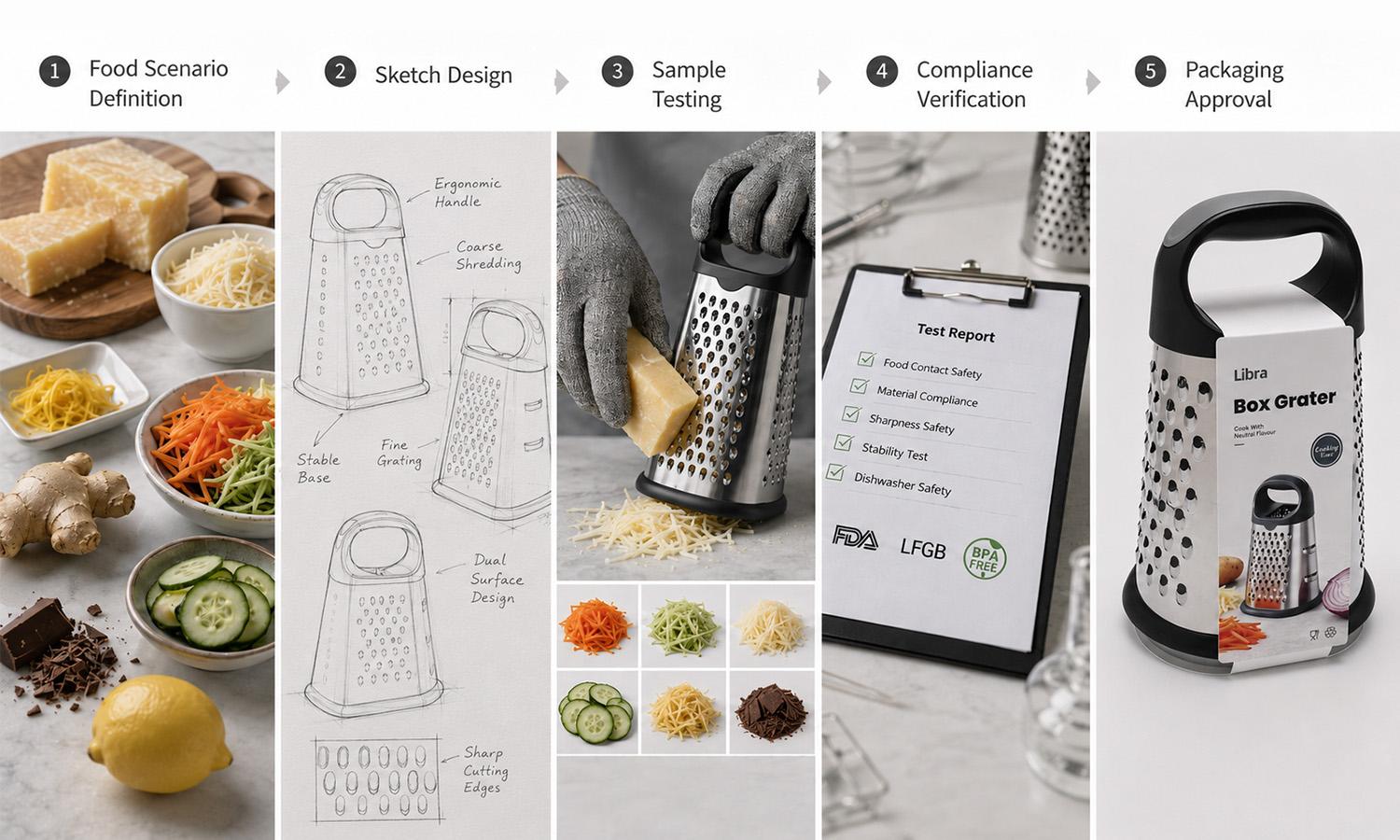
The retail channel influences material, packaging, and testing decisions. A supermarket item, specialist kitchenware product, e-commerce range, food-service tool, and promotional item may need different cost structures and validation levels.
Sampling and Production Approval
Do not approve a sample from appearance alone. Request real-food test records, material information, dimensions, blade-process details, cleaning instructions, packaging mockups, and any recipes shown in packaging or marketing materials for verification against actual test results before confirming production.
Test several samples from the proposed process and record every approved change. When practical, use a small pilot batch to check assembly consistency, packed-product protection, labels, user instructions, and whether Amazon listing details match the physical product before releasing the full order.
Approve and retain a sealed golden sample with the final bill of materials, specification, artwork, barcode, instructions, and quality-control checklist. Changes after approval should follow a documented change-control process.
Compliance Documentation
Compliance requirements depend on the target market, materials, and intended use. For the United States, assess relevant components instead of relying only on a generic “FDA certificate.” The FDA describes this approach on its page for determining the regulatory status of food-contact material components.
For EU or German projects, map any Regulation or LFGB-related testing to the exact legal and retailer requirements. The report should identify the tested material, color, supplier, food type, temperature, and use conditions that apply to the final product.
Check documentation for every intended food-contact component, including containers and measuring bases. A report for another resin, coating, color, or supplier does not automatically support the approved production configuration.
Packaging size, product weight, carton utilization, and component nesting also affect landed cost. Buyers should confirm tariff classification and destination costs with their logistics provider or customs adviser rather than relying on outdated or generic duty estimates.
Supplier Audit and Production Change Control
A supplier review should confirm the factory’s control over blade forming, metal finishing, plastic molding, assembly, cleaning, and final inspection. Buyers should also review material traceability, equipment maintenance, gauge calibration, training records, and the handling of rejected parts.
Confirm which critical operations the factory performs internally and which it subcontracts. For outsourced blades, coatings, soft-touch grips, or packaging, the supplier should maintain approved-source records and incoming-inspection criteria.
Production control should begin with first-article inspection and continue through in-process checks. Waiting until final inspection can make systematic blade, assembly, or packaging problems more expensive and difficult to correct.
The supplier should not change stainless steel, resin, colorant, coating, tooling, blade process, or subcontractor without written approval. A documented change-control procedure should identify when new samples, performance tests, compliance reports, or packaging checks are required.
During an audit, compare current records with the approved golden sample and specification. This helps the buyer determine whether the factory can maintain repeatable output across production lots, rather than producing only a strong development sample.
Pre-Production Quality-Control Checklist
Before production, agree on the inspection sampling plan, defect classifications, acceptance limits, and test methods. Define critical safety issues, major functional defects, and minor cosmetic defects in separate categories.
| Inspection Area | Evidence or Test | Rejection Examples |
|---|---|---|
| Compliance | Bill of materials and reports | Material or scope mismatch |
| Workmanship | Visual and tactile inspection | Burrs, stains, deformation, exposed edges |
| Performance | Approved food tests | Excessive effort, clogging, uneven output |
| Structure | Load and repeated-use tests | Loose handles, unstable bases, weak joints |
| Cleaning | Disassembly and residue check | Food traps, damaged parts, unsupported claims |
| Packaging | Artwork and packed-product test | Wrong labels, damage, inadequate protection |
For rotary graters, inspect drum alignment, secure fitting, rotation under load, crank strength, and unintended exposed edges; some issues appear only when the unit is tested under load. For box graters, test every advertised surface, base stability, handle attachment, panel rigidity, and container fit.
Each report should identify the lot, sample quantity, test food, conditions, measurements, photographs, and benchmark. This creates traceable evidence when the buyer and supplier investigate a production difference.
Packaging and Label Verification
Packaging should protect the blade surfaces, drum, handles, containers, and removable components from impact and movement. Test the complete retail pack using the transport or drop procedure agreed for the sales channel, then inspect product function as well as visible damage.
Review the product name, materials, component list, country-of-origin information, warnings, care instructions, and dishwasher scope against target-market requirements. Barcodes, measurement units, languages, and recycling marks should match the approved artwork and destination market.
Create a claim matrix that connects each objective statement to its supporting record. For example, “stable base” should reference the stability test, while “dishwasher safe” should identify the validated components, program, and cycle record.
Retain the approved artwork, printed color reference, packaging construction, instruction sheet, and packed golden sample. These records give inspectors a clear packaging benchmark and reduce disputes caused by subjective visual comparisons.
Retail Assortment Strategy
Do not place every grater under the same product promise. Each format should have a distinct application, target customer, landed-cost target, retail price position, packaging message, and reason for occupying shelf space.
A practical range may include an entry-level flat or handheld grater, including a Microplane-style fine rasp option, a multi-purpose box grater, and a rotary model for enclosed hard-cheese preparation. This tier can also include rasp graters for zesting or other fine-prep tasks. A foldable or container-based model can add a storage-focused tier when testing confirms that the added structure improves use.
Set purchase quantities according to demand forecasts, carton configuration, supplier minimums, lead time, and replenishment risk. Avoid using universal stocking quantities or price ranges because channel economics and customer expectations vary by market.
Shelf copy should emphasize verified results such as intended foods, output type, removable parts, stable base, or compact storage. Avoid unsupported superlatives and connect each claim to an approved test or material record.
After launch, review sell-through, returns, and customer feedback by SKU before repeating orders or expanding the range. A fine-prep handheld tool is a supporting SKU rather than the core all-purpose option.
Frequently Asked Questions
Can a Box Grater Replace a Handheld Fine Grater?
Not completely. A box grater supports broader food preparation, while a handheld fine grater, or rasp grater, usually provides better angle control for citrus zest, nutmeg, garlic, ginger, and small finishing tasks.
Can a Rotary Cheese Grater Handle Soft Cheese?
Performance depends on cheese texture, temperature, drum geometry, and feeding pressure. Because soft cheese can smear or clog, brands should only make a soft-cheese claim after testing the final production design.
When Should a Cheese Grater Be Replaced?
Replace a grater when cutting performance declines, the handle or drum loosens, the base loses grip, or damage makes cleaning difficult. Rust, cracking, deformation, and unintended sharp edges are also reasons to stop using it.
What Should Buyers Approve Before a Private-Label Order?
Approve the food scenarios, output, blade process, materials, structure, cleaning method, compliance evidence, packaging claims, test results, and features, making sure every promoted point matches the tested sample and golden sample. A photograph cannot replace a documented sample evaluation and golden sample.
Choosing the Right Cheese Grater
The best rotary cheese grater is the model that matches its food application, user group, and retail position—especially if you’re looking for a tool tailored to a specific prep need. Rotary models suit controlled hard-cheese preparation, box graters cover broader kitchen tasks, and handheld formats support precise finishing.
For an OEM/ODM project, define the food result first and then approve the blade, materials, handle, base, cleaning method, compliance evidence, and claims. This creates a clear path from product brief to repeatable production.
Need Help Developing a Private-Label Cheese Grater?
If you are planning a new retail, e-commerce, or OEM/ODM grater line, begin with clear food scenarios and measurable acceptance criteria. Review the available cheese grater product range when defining the required structure and position.
At l-tools, we support kitchenware brands and retailers with product development, sample validation, private-label packaging, and compliance-document coordination across different product categories.
To discuss your target market, performance requirements, or order plan, contact our product team or request samples for evaluation.