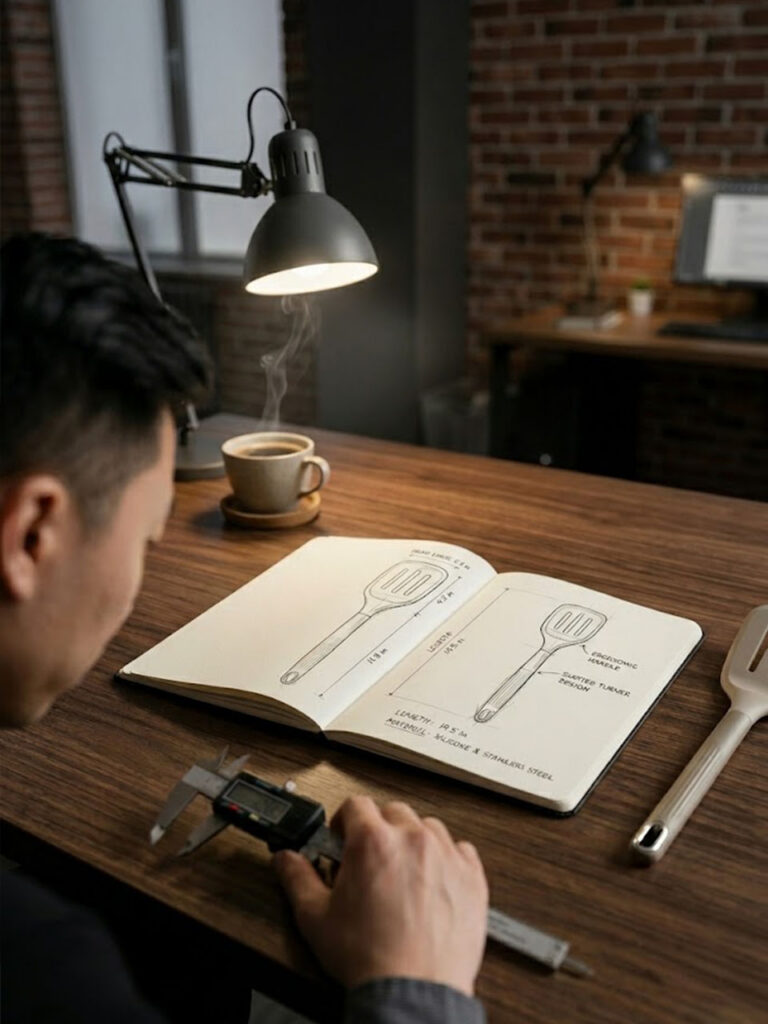

A wooden spoon may look like one of the simplest products in a kitchenware range, but its commercial performance depends on more than attractive grain. Material stability, head geometry, surface finishing, production consistency, packaging, and care instructions can all affect sell-through, returns, customer reviews, and reorder potential after launch.
This guide focuses on reusable wooden cooking spoons for retail, private-label, wholesale, and distribution programs rather than disposable cutlery or one-off craft pieces. Its purpose is to turn an initial product idea into a specification that suppliers can quote, sample, test, and manufacture consistently.
The main sourcing question is not simply, “Which wood looks best?” Buyers need to determine which combination of material, function, price, retail position, and production control fits the intended account and its expected sales channel.
Define Target Customers and the Commercial Role of the Range
Begin by identifying the target customer and how that customer plans to position the product. Mass retailers, specialty kitchen stores, e-commerce brands, hospitality suppliers, importers, and distributors create different expectations for price, presentation, documentation, order volume, and assortment depth.
A value retailer may prioritize simple geometry, repeatable production, compact packaging, and competitive landed cost, while a premium lifestyle brand may accept more grain variation. In the second case, the finish, shape, and presentation must create visible value within the wider kitchen utensils category.
The range also needs a specific commercial role, such as an entry-price essential, premium natural-material collection, cookware companion, or gift set. Buyers reviewing solutions for importers and distributors should additionally consider supply continuity, carton efficiency, destination-market documents, and repeatability across later orders.
Read the Market by Channel, Not Geography Alone
Regional labels provide a starting point, but retailer type often explains more than geography alone. Two buyers in the same country may need very different spoons when one supplies discount stores and the other serves premium kitchen boutiques with different packaging and presentation standards.
Competitor benchmarking should therefore examine more than retail price or visual style. Compare wood species, length, head shape, edge thickness, surface treatment, logo method, set size, packaging, care instructions, and recurring consumer feedback to identify differences that affect the buying decision.
High-volume and premium opportunities should then be evaluated separately. A volume program benefits from repeatable appearance, efficient machining, controlled SKU complexity, and protective packaging, while a premium program may justify distinctive grain, refined ergonomics, extra finishing work, or gift-ready presentation.
Turn Market Needs into a Product Development Brief
Before requesting quotations, define the cooking task and conditions of use for every proposed spoon. Stirring sauces, scraping pan corners, mixing dense food, serving portions, and working with non-stick cookware may require different head shapes, edge profiles, handle lengths, and material decisions.
Subjective descriptions must become controllable requirements. “Comfortable” can become defined handle dimensions and repeated-use feedback, while “smooth” may require an approved surface reference, sanding requirement, wash test, and defect limit.
A useful product brief should state the target market, retail channel, price position, intended function, preferred material, dimensions, finish, branding, packaging, order volume, and destination-market requirements. This information helps suppliers quote comparable products and allows the development team to begin wood selection with fewer hidden assumptions.
Choosing the Best Wood for Wooden Cooking Spoons

The best material is not simply the hardest, most expensive, or most visually distinctive species. A suitable wood must balance intended use, food-contact suitability, grain structure, dimensional stability, machining behaviour, appearance, availability, finishing time, and finished cost; when it comes to material selection across common wood types used for cooking and related cooking utensils, hardwood is usually more suitable than softwood.
Buyers should also evaluate the actual material supply behind the species name. Lumber grade, colour range, visible defects, grain direction, drying control, batch traceability, and the supplier’s ability to prevent unapproved substitutions can matter as much as the nominal wood type. For many buyers comparing the best wooden options, olive wood, cherry wood, and teak are often regarded as among the materials used for wooden spoons, and olive wood is the best choice for buyers who want a more premium natural look.
Moisture content needs a defined measurement method, production stage, sample size, and acceptance range rather than a vague instruction to use “dry wood.” The agreed range should reflect the species, factory environment, product geometry, destination climate, and expected storage and use conditions.
Compare Wood Species by Commercial Role
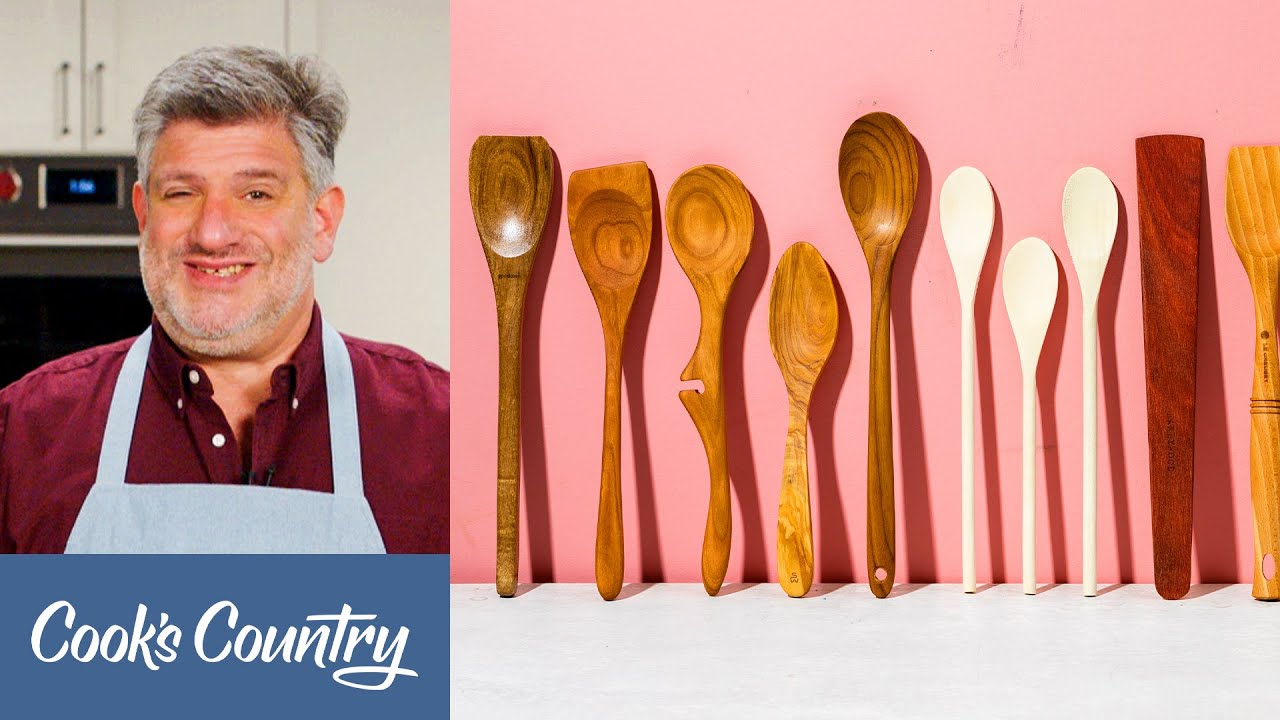
Beech and maple can support a clean, relatively uniform visual direction, while acacia, olive wood, teak, and cherry wood may be considered when stronger grain character is part of the retail story. In Europe, beech wood is widely used for wooden utensils and other kitchen products because wood is durable and more resistant to cracking under temperature changes. Cherry suits serving-focused spoon formats with a warmer presentation look, and both cherry and olive offer relatively strong durability. Olive is often chosen for a premium olive wood utensil story because its distinctive grain pattern and varied grain patterns make each piece visually individual, while its low permeability helps reduce stain and odour absorption. Teak, made from a hardwood naturally rich in oils, also resists moisture and bacterial growth well. Rubberwood and birch may suit more mainstream programs when the available grade, supply consistency, processing, and finish meet the approved specification. Oak is generally less suitable of wood for cooking tools because it absorbs water more easily.
Buyers developing a wooden kitchenware collection should also consider whether material variation can remain visually coherent across spoons, boards, serving pieces, and related products. A wood that works for one SKU may not automatically provide the right appearance, yield, or structure across an entire range.
Bamboo should be assessed separately from solid-wood species because its material structure and processing route differ. Instead of assigning every option one “best wood” score, buyers can use authoritative information on wood properties and moisture behaviour together with supplier-specific samples to compare density, stability, machining, and surface results.

Raw material price is only one part of the calculation. A lower-priced species can produce a higher finished-unit cost when variable colour, defects, low yield, additional sanding, finishing time, rejects, or rework reduce the number of acceptable products.
Responsible Sourcing and Material Traceability for Wooden Utensils
A material declaration should identify the approved species clearly enough to prevent substitution with visually similar wood. Depending on the buyer and destination market, the sourcing file may also need origin information, purchasing records, batch references, and documentation connecting the finished product to the approved material supply.
If the product carries an FSC claim, buyers should verify the relevant FSC chain-of-custody certification rather than accepting a logo or general supplier statement. The certification scope, supplier status, transaction documents, product group, and proposed packaging claim should be checked before artwork approval.
Environmental wording also requires discipline. “Wooden,” “renewable,” “FSC-certified,” “recyclable packaging,” and “biodegradable” describe different issues, so product pages and packaging should use only claims supported by project documents.
Treat Solid-Wood Stability as a Design Issue
In our work with larger solid-wood products such as pizza boards and cheese boards, we have seen cracking during use when material choice, moisture condition, product diameter, and structure were not considered together. Choosing a more attractive or expensive wood did not automatically solve the problem, and some designs required structural reinforcement that preserved the intended appearance.
A cooking spoon has a different size and load pattern, but the development principle remains relevant. Buyers should review grain direction, thin scraping edges, narrow necks, hanging holes, and abrupt thickness transitions as connected material-and-geometry decisions rather than isolated design details.
Sampling should therefore include functional use and moisture-related evaluation, not just a visual review of a polished sample. The approved specification should connect species, grain expectations, geometry, moisture limits, finish, test method, and defect criteria before the project moves into detailed design.
Design the Spoon Head for Cooking Around Real Cooking Tasks

Spoon geometry should begin with the intended cooking task rather than a preferred silhouette. Stirring, scraping, mixing dense food, reaching pan corners, serving portions, and working in deep cookware create different requirements for head width, bowl depth, edge profile, neck strength, and overall length.
A thin scraping edge may improve contact with cookware; on the wooden spoon, a thinner edge is also more effective for scraping food and is easy to draw under stuck ingredients for better ease during cleanup, while still helping it reach the bottom of pots or pans. This also lets users briefly rest the spoon on the rim or inner edge of the pan between motions and quickly continue cooking. However, reducing thickness without reviewing grain direction and stress concentration can weaken the spoon head. Asymmetrical corners may improve access in square pans, while deeper bowls can increase serving capacity but create more resistance during stirring.
Functional trials should use representative cookware and foods instead of relying on dry handling alone. The team should record scraping contact, food release, control, flex, balance, and whether the head reaches the intended surfaces without creating an unnecessarily fragile edge.
Set Handle Ergonomics with Measurable Targets
Handle specifications should define overall length, grip width, thickness, taper, curvature, and the transition into the spoon head. For most designs, an overall length of 8 to 10 inches is ideal because the spoon is easier to control in common kitchen tasks. These dimensions influence working distance from heat, control in deep cookware, storage, packaging size, material yield, and the user’s wrist position.
Balance and grip should be assessed with dry, wet, and lightly oily hands over repeated tasks to confirm the handle is comfortable to hold and shaped well to hold without strain. If the design includes a hanging hole, logo, or branded end detail, confirm that it does not create a weak point, rough edge, uncomfortable pressure area, or packaging conflict.
Specify Surface Finish as a Production System
“Natural finish” is not a complete specification because unfinished, oil-treated, wax-treated, and other approved systems behave differently. The buyer should document the exact finish composition, supplier, application method, quantity, drying or curing condition, appearance range, and destination-market requirements.
Finish approval should include wash-and-dry trials, odour checks, stain exposure, colour transfer, tackiness, uneven absorption, and surface roughness. Care instructions must match the validated finish, and the factory should not substitute oils, waxes, adhesives, or branding treatments without written approval. Different wood types do not share the same care cycle; maple is the one that often needs more frequent oiling to maintain moisture balance and surface condition.
Move from Prototype to an Approved Golden Sample
Dimensioned drawings should identify the head, edge, neck, handle, radii, hanging hole, and logo position, with tolerances assigned to characteristics that affect function or assembly. Appearance characteristics such as grain range, colour variation, sanding quality, and finish may also require physical references alongside drawings.
Functional samples should use the intended wood species, geometry, finish, and branding process wherever possible. Guidance on what buyers should examine during kitchenware sampling can help teams evaluate more than appearance, including balance, scraping, repeated handling, washing, packaging fit, and consistency between samples.
After changes are closed, approve a signed or sealed golden sample together with the current drawing and specification revision. A small pilot run may still be appropriate when production volume, natural material variation, new fixtures, packaging complexity, or process risk makes one approved sample insufficient evidence of repeatability.
Build Quality Control into the Manufacturing Process
A useful control plan follows the complete manufacturing process: incoming wood inspection, conditioning, cutting, shaping, sanding, finishing, drying, branding, cleaning, inspection, and packing. l-tools product design and prototyping capabilities can be reviewed in the context of moving product requirements from a concept into repeatable manufacturing controls.
Quality standards should distinguish acceptable natural variation from manufacturing defects. Buyers and suppliers should define limits for cracks, splinters, sharp edges, dents, burn marks, open joints, strong odours, mould, inconsistent finish, dimensional deviation, and other defects relevant to the approved design.
In-line checks should focus on characteristics that become difficult to correct later, while final inspection confirms the finished product and packaging against approved records. Retained production samples, inspection results, material-lot references, and revision history make later complaint investigation and corrective action more reliable.
Evaluate Supplier Capability Beyond the Sample

A polished sample shows that a supplier can make one acceptable piece, but it does not prove stable mass production across shifts, material lots, and larger orders. Buyers should review material storage, moisture measurement, machining, sanding, finish application, drying, branding, inspection, packing, production capacity, and subcontracted processes. They should also assess whether the supplier’s craftsmanship is consistent in volume runs and, if samples or past projects include ash, verify performance on a repeated wash basis because some ash spoons hold up poorly after multiple cleanings.
Ask for a process flow, equipment list, quality plan, material records, capacity information, and examples of in-line inspection results from comparable production. The audit should identify where wood species, finish, adhesives, or outsourced work could change without approval and how the supplier manages change control. If a product is presented as made in a specific country or region, confirm that origin claims are supported by production and sourcing records.
Build a Destination-Market Compliance Plan
Food-contact requirements should be defined by destination market, intended food, temperature, contact time, and conditions of use. Review the wood, oils, waxes, coatings, adhesives, inks, and other applied substances separately rather than treating “food safe” as a complete product specification.
For the US, the regulatory status of food-contact material components depends on the substance and its intended use, so a general FDA statement is not enough. For the EU, buyers should consider the food-contact materials framework, good manufacturing practice, applicable national measures, and the final product’s intended use.
If South Korea is included, reference current MFDS requirements for utensils and food-contact articles rather than the outdated KFDA name. Project-specific compliance reports and supporting documentation should match the actual SKU, material, finish, supplier, manufacturing process, and destination market, with document review or retesting considered after relevant changes.
Calculate Landed Cost and Packaging Requirements
Landed cost should include material yield, machining, sanding, finishing, branding, packaging, testing, inspection, inland transport, freight, duties, warehousing, and expected quality loss. Comparing quotations without a common specification can create an apparent saving that later disappears through rejects, rework, delays, or returns.
Packaging also affects cost, protection, shelf presentation, MOQ, and the complexity created by different SKU or artwork versions. l-tools guidance on retail-ready packaging and quotation requirements can help buyers define the pack format, barcode, labels, carton quantity, artwork, testing needs, destination market, and volume before requesting a final quotation.

Make Care Instructions Part of the Specification
Care instructions should reflect the approved wood and finish rather than repeat generic advice. To clean wooden spoons, the validated care method should state that users should wash them with warm water and mild soap, then dry them immediately, and never put them in the dishwasher. Define the validated care method for washing, rinsing, drying, storage, and conditioning, including immediate cleaning after use, prompt towel drying or air drying, and avoid recommending a household oil unless its suitability has been reviewed for the product and target market. If buyers want to reduce warping and cracking risk, utensils should never be left soaking in water, because prolonged soaking can cause warping.
The same care wording should appear consistently on packaging, inserts, product pages, and customer-service materials, including guidance on natural variation and replacement conditions. For stubborn stains, lemon and baking soda can be used to remove stubborn stains from wooden spoons if the treatment is compatible with the approved finish. Repeated wash-and-dry trials can reveal roughness, staining, odour, cracking, or finish changes that require revised instructions. Periodic conditioning with food grade mineral oil or mineral oil, such as once a year, can help extend service life. Spoons are durable enough to last for decades with proper care. A typical service life is 10 to 20 years.
Control Moisture Through Storage, Packing, and Shipping
From our production experience in Guangdong, the rainy season can increase moisture risk before a wooden product reaches final inspection. Wooden handles and other components may absorb moisture during storage, so we use drying-equipped storage areas and check moisture condition before final assembly and packing.
The cartons also require attention because corrugated packaging can absorb moisture from the same environment. For wooden-product orders, we keep cartons under controlled dry storage conditions so the packaging does not reintroduce moisture at the final stage.
The buyer’s complete control plan should cover components, finished goods, cartons, warehouse conditions, packing, and shipment rather than incoming lumber alone. Because visual inspection cannot confirm moisture condition, the plan should define the measurement method, acceptance limit, inspection stage, records, and response to an out-of-limit result for the season, route, and destination climate.
Plan the Assortment Around Core Functions

A commercially useful range of wooden spoons should begin with a small number of clearly differentiated functions, such as stirring, scraping, sautéing, mixing, and serving. Avoid adding shapes that look different in a catalogue but perform the same task, because duplicated functions increase sampling, packaging, MOQ, forecasting, and inventory complexity.
Value and premium tiers should have visible reasons for their price difference. Material character, finishing quality, ergonomics, set composition, branding, packaging, and traceability may support the premium tier, while the value tier should protect essential function and production consistency across key cooking tools.
For some retailers, building a focused kitchen tool assortment can be more effective than filling a large set with low-use pieces. Bamboo spoons can also work as a complementary SKU for kitchen programs where lighter weight, sustainability, and gentler contact with cookware surfaces matter. Additional spatulas, turners, salad servers, or gift configurations should be added only when they create a clear use case, price step, or cross-selling opportunity.
Validate Performance and Learn After Launch
Performance testing should use pass-and-fail criteria agreed before the test begins. Depending on the design, the program may include repeated washing, moisture cycling, staining, abrasion, controlled loading, edge inspection, dimensional checks, finish evaluation, odour review, and packaging or transport trials.
Record the original condition and subsequent changes at defined test intervals using measurements, photographs, and approved reference samples. Every result should lead to a decision: accept the specification, revise the material or geometry, change the finish or process, strengthen packaging, or update the care instructions.
After launch, monitor sell-through, reorders, reviews, returns, and complaints by SKU and production lot. Production records, retained samples, inspection results, and shipment data can help separate isolated misuse from a recurring material, process, packaging, or logistics problem.

Work with l-tools from Brief to Production
An effective product development brief should include the target market, retail channel, price position, intended functions, preferred materials, packaging, expected quantity, compliance needs, and launch schedule. This gives the team enough context to review the SKU plan, identify risks, and propose sampling priorities without reducing the project to a catalogue selection.
The l-tools OEM/ODM ordering process moves from requirement alignment through design, sampling, confirmation, production, inspection, and delivery. Before production, both sides should confirm the current specification and golden sample, testing responsibilities, packaging artwork, MOQ, quotation validity, lead time, inspection arrangement, and change-approval process.
Conclusion
A successful wooden cooking spoon range depends on decisions that connect commercial positioning with material, geometry, moisture control, finish, compliance, costing, packaging, supplier capability, and care instructions. Treating each subject separately can leave development gaps that appear later as inconsistent quotations, sample revisions, production defects, shipping problems, or customer complaints.
There is no universally best wood, spoon shape, or finish for every account. A more reliable approach is to define the use case, translate expectations into measurable specifications, validate production-intent samples, control changes, and use post-launch evidence to improve future orders.
Planning Your Wooden Utensil Project
If you are developing a private-label wooden utensil range, explore the l-tools kitchenware range and contact our team with your target market, SKU plan, preferred materials, packaging requirements, estimated quantity, and launch schedule. We can then discuss suitable product directions, sampling priorities, documentation needs, timing, and the information required for a project-specific quotation.