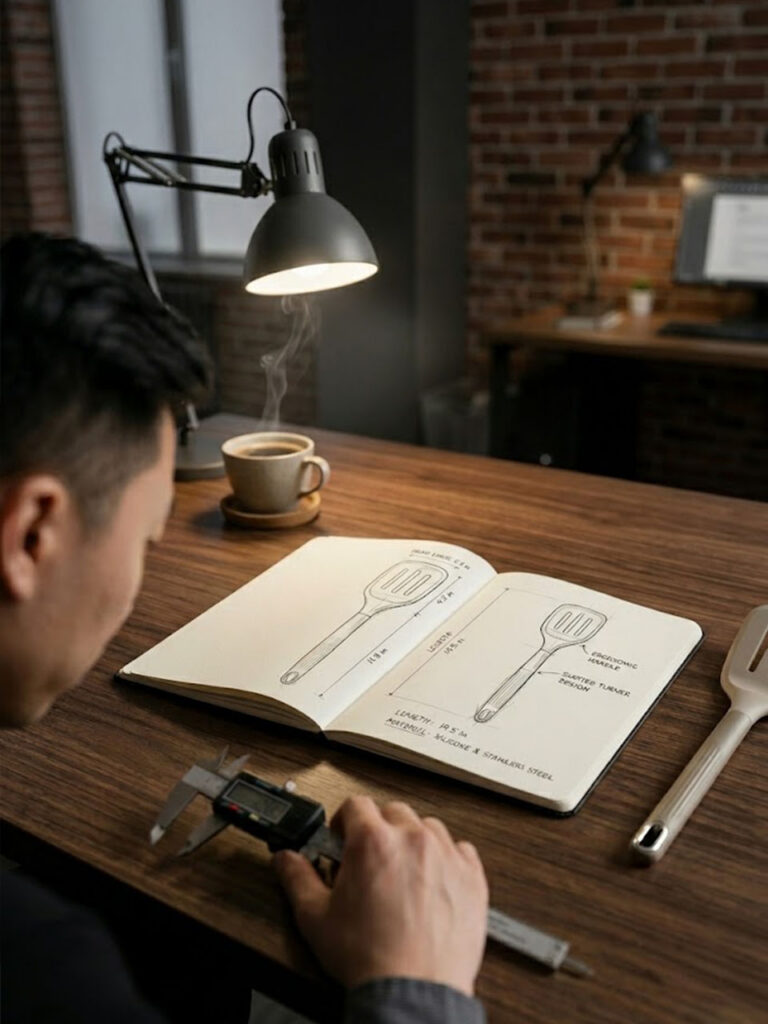
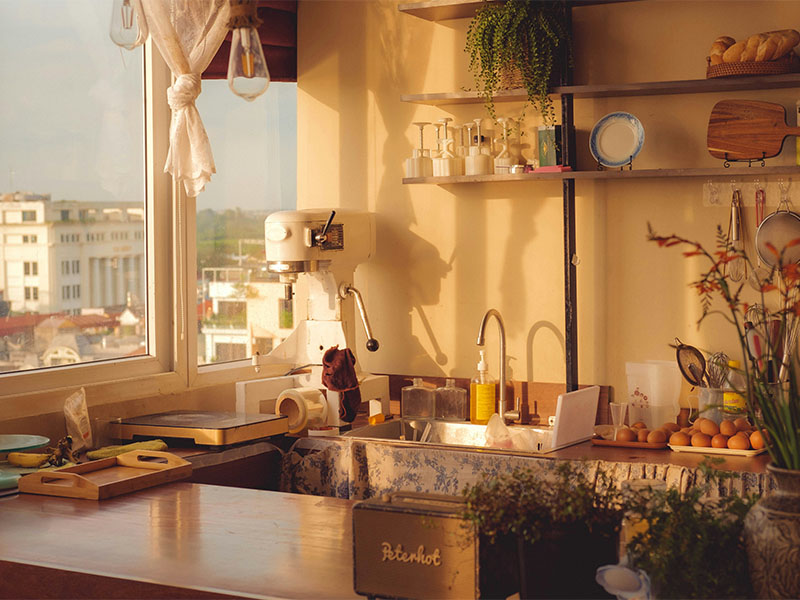
When Cooking Stops Being Slow and Controlled
Most kitchen tools seem fine when cooking is calm.
You chop one ingredient. Stir one pan. Open one lid. Rinse one utensil. In that kind of setting, almost any tool can feel acceptable.
But real cooking often does not stay that neat.
Dinner starts late. The pan is already hot. Water is boiling. Someone is asking a question from the next room. A sauce needs stirring while vegetables still need cutting. Suddenly the kitchen is not a slow, controlled workspace anymore. It becomes a moving workflow.
That is where tool problems start to show.
Not always as breakage. Not always as obvious defects. More often, the tool simply starts to get in the way.
Many home cooks describe it in plain language: “I don’t have time to deal with tools that slow me down.” Or, “It works, but not when I’m cooking fast.”
That kind of feedback matters for brands and product teams. It points to a different kind of product test. Not whether the tool works in a perfect moment, but whether it keeps working when attention is split.
Small Frictions Become Big Problems Under Speed
When cooking speed increases, tiny delays become much more noticeable.
A spatula that needs a grip adjustment feels harmless during slow cooking. But when food is browning fast, that small adjustment becomes irritating. A lid that is awkward to lift may not seem like a major flaw. Until steam is rising, your hands are wet, and another pan needs attention.
These are not dramatic failures. They are friction points.
Common examples include:
- Switching between tools takes too long
- Handles require repositioning before use
- Lids are hard to place down quickly
- Utensils roll, slide, or disappear behind other items
- Tools are not easy to grab without looking
Under pressure, users stop judging tools only by comfort or appearance. They judge them by whether the tool helps them move.
This is where kitchen tool usability becomes very practical. It is not just about how a product feels in the hand during a product demo. It is about whether someone can grab it, use it, put it down, and move to the next task without breaking rhythm.
A tool can be well made and still feel slow.
That is an important distinction.
Why Good Design Can Still Fail in Fast Cooking
Many kitchen tools are designed around a single task.
A peeler peels. A tong grips. A ladle serves. A spatula flips. On paper, this makes sense. Product evaluation often follows the same pattern. Does the tong close properly? Does the spatula lift food? Does the handle feel comfortable?
But cooking is rarely one task at a time.
It is more like a chain of interruptions.
You stir, then reach for seasoning. You turn down the heat, then grab a lid. You check meat, then rinse a knife, then move a cutting board, then return to the pan. Each tool enters and exits the workflow quickly.
That is why cooking tools design should not only focus on isolated function. It should also consider transition moments.
For example:
- Can the tool be picked up quickly from a crowded surface?
- Can it be used with one hand while the other hand is busy?
- Can it be placed down without making a mess?
- Can the user identify it by feel, not just by sight?
These details become more important as cooking becomes faster.
This is also where earlier topics like long-term comfort connect with speed, but do not replace it. An article like “Why Some Kitchen Tools Become Uncomfortable After Long-Term Use” looks at fatigue over time. Speed-based failure is different. It can happen within ten minutes, during a busy cooking sequence, when the tool interrupts the user’s flow.
The product may still be “good.” It may pass normal checks. But in a fast kitchen, the standard changes.
Kitchen Counter Reality: Chaos vs Design Assumption
Product photos usually show clean counters.
Real counters are different.
There may be a cutting board, two bowls, a wet towel, seasoning jars, a hot pan, packaging, vegetable scraps, and three utensils already in use. The cook may be working in a narrow space between the stove and sink. There is heat, steam, noise, and urgency.
This environment changes how tools are experienced.
A tool that looks elegant when placed alone on a table may be hard to notice beside five other items. A handle that feels balanced in a showroom may be harder to grab when lying near a hot lid. A utensil that performs well in a straight motion may feel clumsy when the user has to reach across a crowded counter.
In this setting:
- Tool accessibility matters more than appearance
- Placement becomes part of usability
- Grab speed matters more than precision
- A clear handle shape can matter more than decorative detail
- Stability on the counter affects real use
This is a practical side of kitchen workflow efficiency.
The tool is not being judged alone. It is being judged inside a messy system. The counter, stove, sink, storage, and user movement all become part of the product experience.
That is why small tweaks can create a surprisingly large difference. The idea discussed in “Why Tiny Tweaks Make a Big Difference in Kitchen Tools” applies strongly here. A slight handle angle, a better resting position, or a more obvious grip zone may not sound exciting. But during fast cooking, those details can decide whether the tool feels helpful or annoying.
What Product Teams Often Miss About Speed-Based Usage
At L-Tools, we’ve noticed that speed-of-use often changes how people evaluate a product.
A utensil may look fine during a slow inspection. It may feel solid. It may perform its basic function. But when the same tool is used in a faster cooking rhythm, different questions appear.
Can the user grab it without thinking?
Does it slow down tool switching?
Does it create extra cleanup?
Does it stay useful when the cook is distracted?
In real product discussions at L-Tools, speed-based use often reveals things that static testing misses. This is especially relevant for retailers, private label buyers, sourcing managers, and product developers who need products to work in everyday kitchens, not just controlled samples.
Most product testing is still fairly static.
A person holds the tool. Checks the material. Tests the movement. Maybe uses it once or twice. That has value, but it does not fully reflect real cooking behavior.
Fast cooking is dynamic. It includes multitasking, interruption, space limits, wet hands, heat, and repeated tool switching. These conditions affect kitchen utensil performance in ways that are easy to overlook.
This is also why ergonomic kitchen tools should not be evaluated only by handle softness or grip comfort. Ergonomics also includes timing. A tool that saves one second repeatedly may feel better than a tool that only feels comfortable when held still.
Even topics like “Why Do Kitchen Tongs Become Loose Over Time?” can be viewed through this lens. A tong does not only need to grip food. It needs to respond quickly, predictably, and without hesitation when the pan is active and the cook has no spare attention.
The Faster Kitchen Is Changing the Standard
Modern kitchens are not always bigger, calmer, or slower.
Many people cook in short windows of time. They prepare meals between work, family, delivery schedules, and limited evening energy. Even when cooking is enjoyable, it is often compressed.
That changes how tools are judged.
A kitchen tool no longer succeeds only because it works under normal conditions. It also needs to keep up when the pace changes. It needs to stay easy to reach, easy to control, easy to place down, and easy to return to without thought.
Speed exposes what slow cooking hides.
For kitchenware brands and buyers, this is worth paying attention to. The next layer of product improvement may not come from louder features or more complicated designs. It may come from watching how people actually cook when time is tight.
Because in faster kitchens, tools are judged less by how they look at rest, and more by how well they keep moving with the cook.