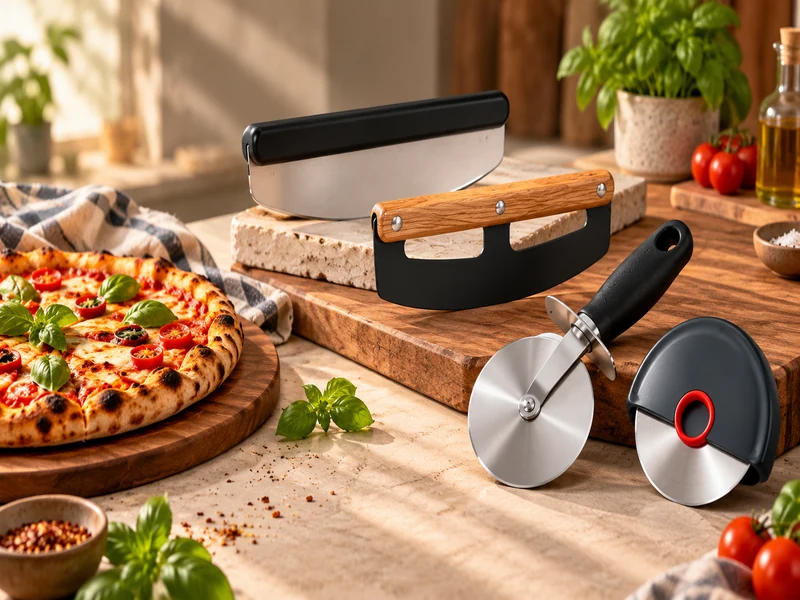
Choosing the best pizza cutter involves more than finding the sharpest-looking blade. A cutter that works smoothly on a thin pizza may feel less controlled on a thick crust with heavy toppings.
Home cooks also need to consider grip comfort, cleaning, storage and finger protection. For retailers and private-label teams, the same details can affect product positioning, care claims and customer satisfaction.
This guide compares leading cutter formats and explains how to evaluate them before buying or developing a product.
Why Pizza Cutter Design Matters
A well-matched cutter should make a clean line without repeated passes or pulling cheese across the pizza. Blade geometry matters, but so do wheel stability, handle angle and the space around the axle.
No single design is best for every kitchen. A rolling wheel offers familiar control, a rocker can cover a large pizza quickly, and a disc cutter provides more compact storage.
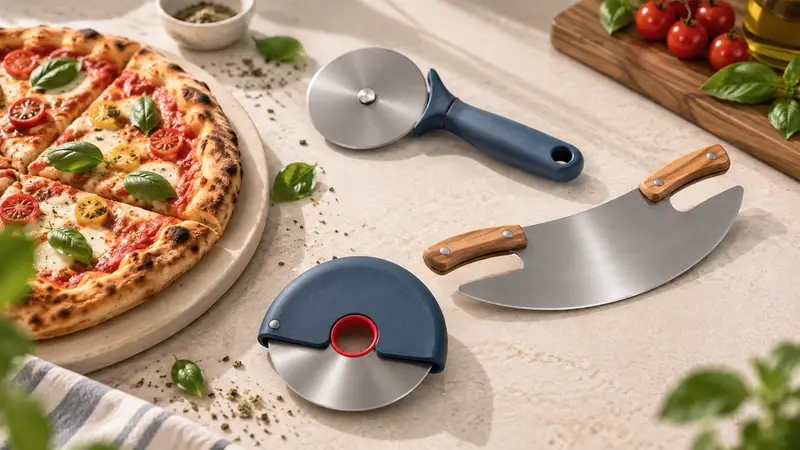
Best Pizza Cutters at a Glance
| Product | Type and key details | Dishwasher information | Best suited to |
|---|---|---|---|
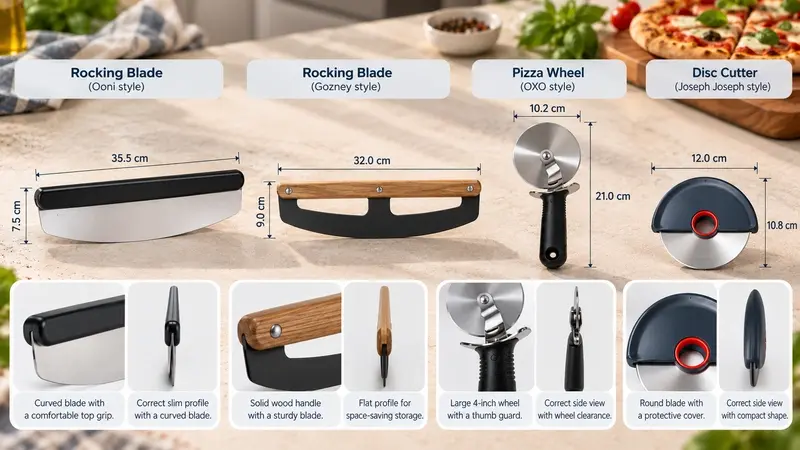
| Ooni Pizza Cutter Wheel | 4.4-inch stainless-steel wheel; glass-reinforced nylon handle | Officially listed as dishwasher safe | General home use and users who want a larger wheel |
| Gozney Pizza Rocker | 13¾-inch, 2 mm thick stainless-steel blade; wooden handle | Not stated on the official product page reviewed | Large pizzas, thick crusts and straight full-width cuts |
| OXO Good Grips 4-Inch Pizza Wheel | 4-inch stainless-steel wheel; die-cast zinc guard; soft non-slip handle | Not stated on the official product page reviewed | Users prioritizing grip comfort and finger protection |
| Joseph Joseph Disc Easy-clean | Circular stainless-steel blade; removable blade and silicone guard | Officially listed as dishwasher safe | Small kitchens and compact storage |
These are preliminary recommendations, not universal winners. The right choice depends on the pizza, the user and the cleaning routine.
Quick Buying Recommendations
- Choose a rolling wheel for everyday pizzas and familiar one-handed control.
- Choose a rocker for large pizzas or thick crusts when storage space is available.
- Choose a disc cutter when compact storage and a removable blade are priorities.
- Choose a guarded, non-slip handle if comfort and finger protection matter most.
- Check the manufacturer’s care instructions instead of assuming that every stainless-steel cutter is dishwasher safe.
How These Picks Were Selected
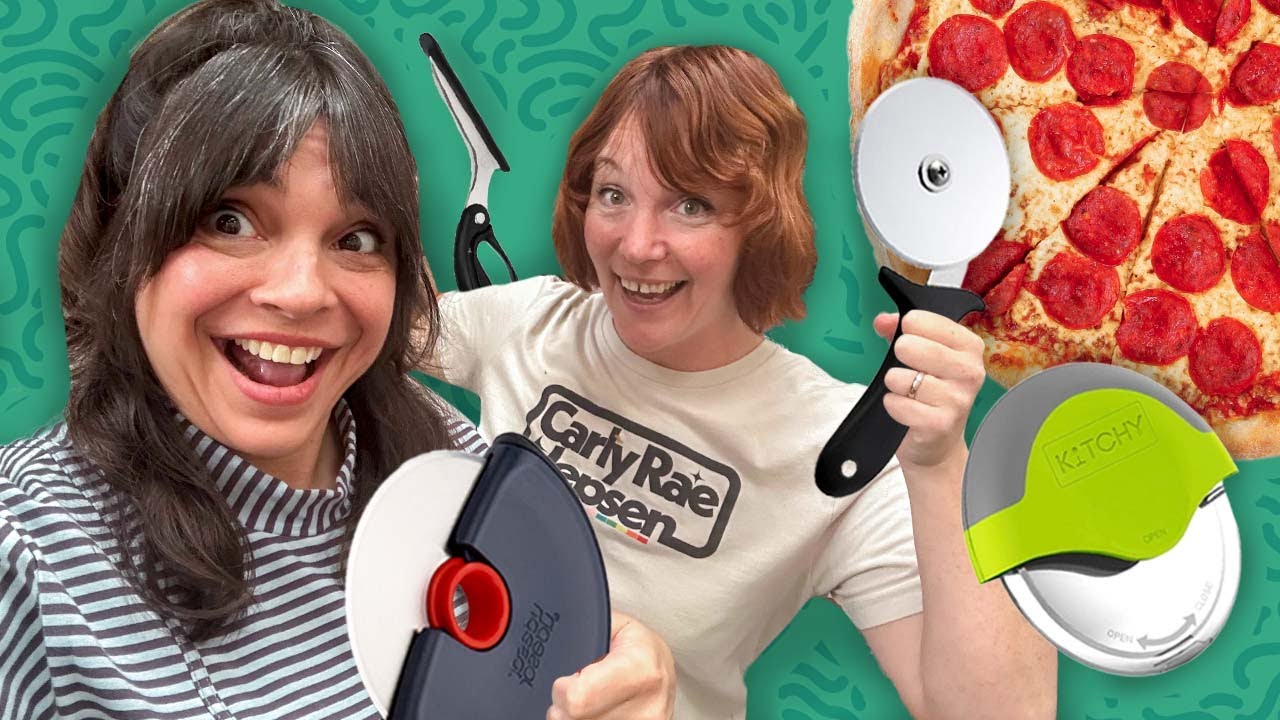
This opening shortlist is based on current official product specifications and care information, with this page’s content primarily compiled from those official sources rather than a completed side-by-side laboratory test. The later sections will separate manufacturer claims from observable design features and practical evaluation criteria.
Product information was checked on October 8, 2026. Retailers developing their own range can also review l-tools’ cutting and chopping kitchen tools before comparing materials, structures and price positions.
Comparing Pizza Cutter Types
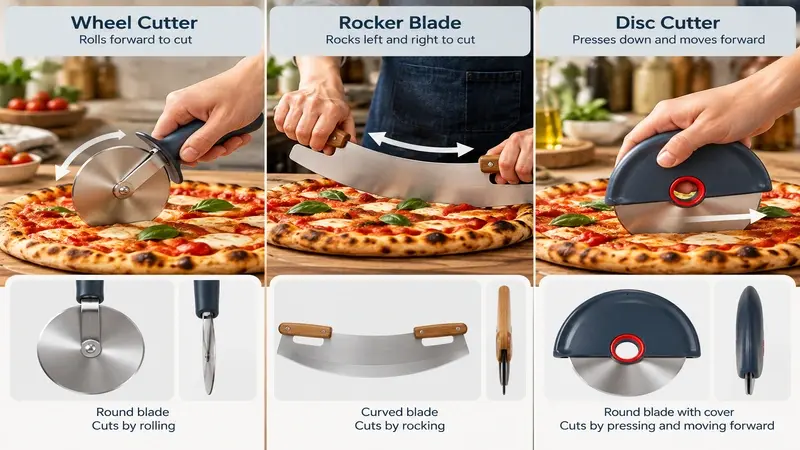
The first decision is not the brand. It is the cutting motion. Wheels, rockers and disc cutters can all produce clean slices, but they solve different problems.
| Cutter type | Main strength | Main limitation | Best use |
|---|---|---|---|
| Rolling wheel | Directional control and compact storage | Food can collect around the axle | Everyday thin- and medium-crust pizza |
| Rocking blade | Fast, full-width downward cuts | Requires more storage and blade protection | Large, thick or heavily topped pizza |
| Disc cutter | Compact body and direct palm pressure | Blade clearance and grip may feel limiting on thick crusts | Small kitchens and occasional use |
Rolling Wheel Cutters
A rolling wheel provides familiar directional control in a home kitchen. It follows curves easily, works with one hand and fits into a utensil drawer more readily than a long rocker.
The trade-off appears around the axle and support. Repeated passes can disturb soft toppings, while cheese and sauce may enter narrow gaps that are difficult to rinse.
Rocking Blade Cutters
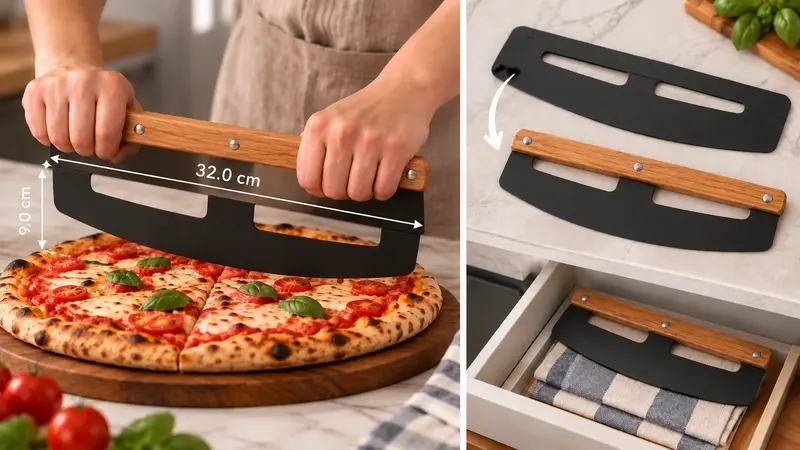
A rocker uses a broad, fixed curved blade and downward movement instead of a rotating wheel, as a rocking cutter is designed to press through the pie in one clean motion. It can cross a large pizza with fewer motions, and the common half moon profile helps apply pressure more evenly, which makes it useful for thick crusts or generous toppings.
Its size creates a practical storage question. The edge should not remain exposed in a drawer, so buyers should check whether a sheath, guard or suitable storage position is available.
Disc-Style Cutters
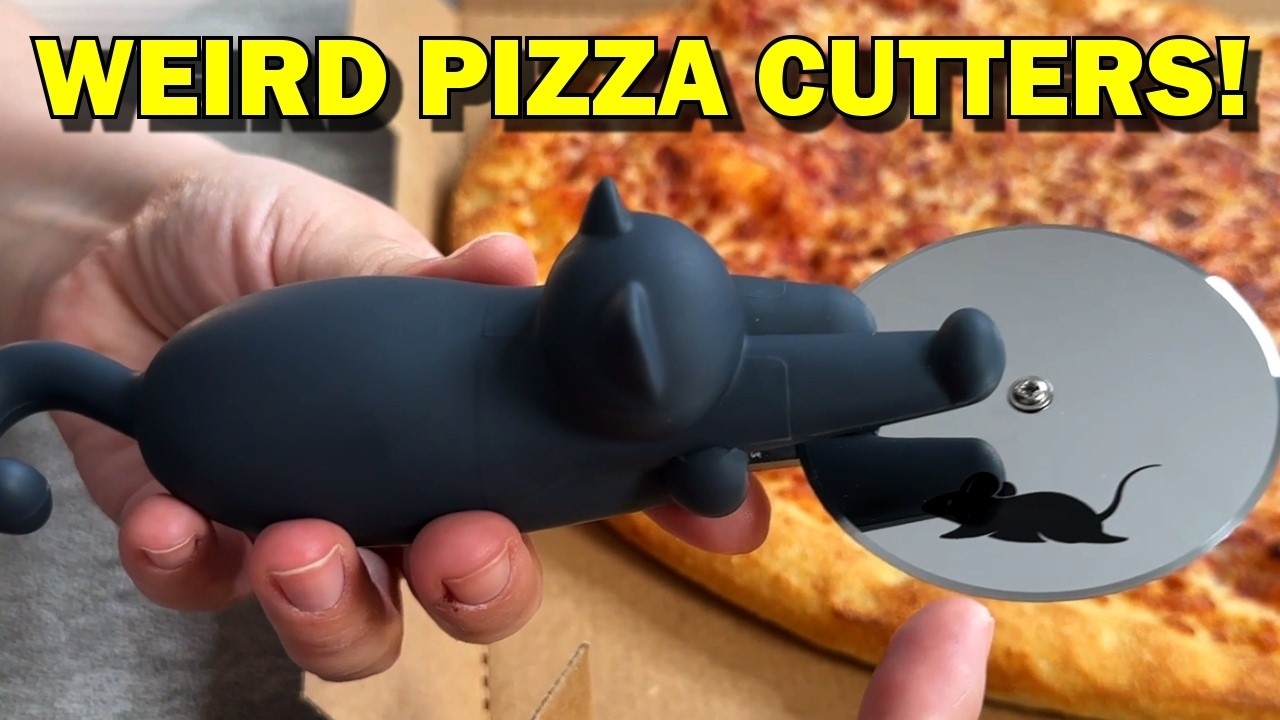
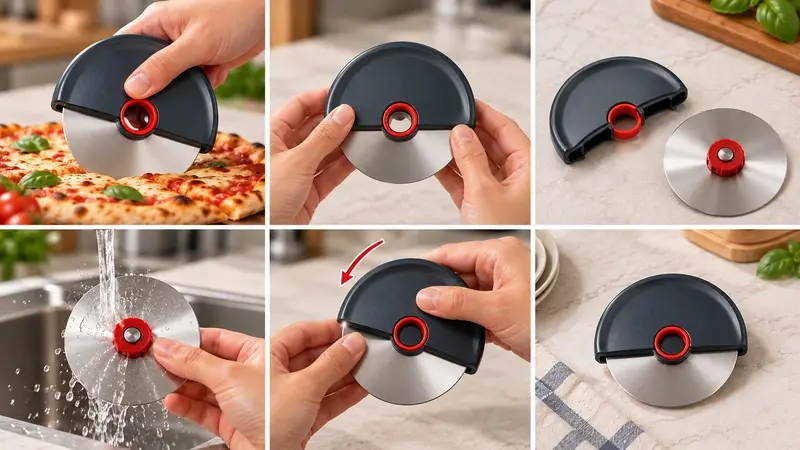
A disc cutter places the hand directly over a circular blade. This can provide controlled downward pressure while reducing the overall storage footprint.
However, the housing around the blade may limit clearance on thick pizza. Buyers should also check how easily the blade can be removed, washed, dried and locked back into position.
Wheel Size and Support Structure
A wheel measuring around 3.5 to 4 inches is a practical starting point for general household use, and a blade close to four inches usually suits most common household sizes of pizza. A larger diameter can clear thicker crusts and cover more distance per rotation, but it also increases the cutter’s overall size.
Wheel support matters as much as diameter. A single-sided support leaves more of the axle accessible, while a double-sided or fork-style structure holds the wheel from both sides.
In our product development work, we have found a clear structural trade-off: a single-sided support is easier to clean, while a double-sided support generally provides better cutting stability. Food can become trapped between the two arms, so the more stable structure may require soaking or careful rinsing under running water.
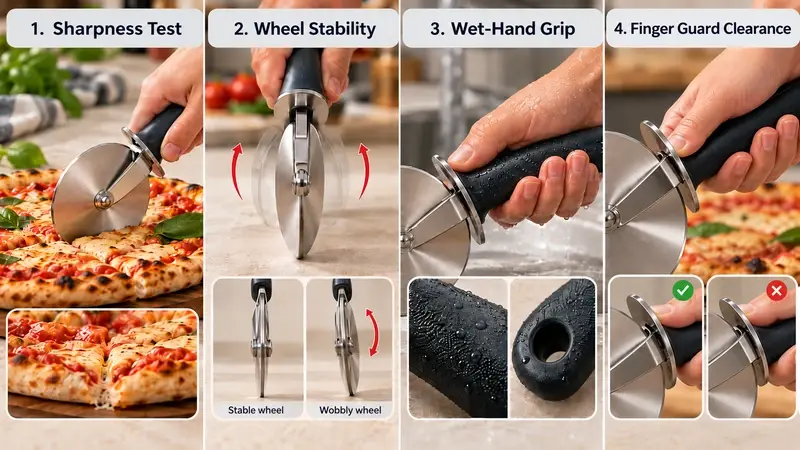
For sample approval, move the wheel gently from side to side and then make several straight cuts. Wobble becomes a concern when the cutter drifts, vibrates or produces inconsistent cutting depth.
Blade and Handle Materials
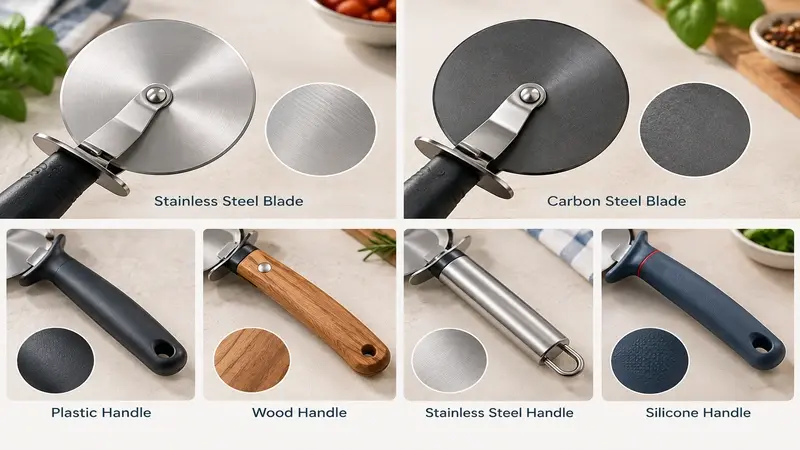
“Stainless steel” does not describe one fixed level of blade performance. Steel grade, hardness, heat treatment, blade thickness and edge geometry work together.
Martensitic stainless steels such as some 420 grades can be hardened and are widely used for cutlery and cutting tools. Austenitic 304 offers good corrosion resistance, but it should not automatically be presented as the better cutting blade simply because its grade number is higher.
Blade material directly affects cutting performance: the blade is more likely to stay sharp enough to cut through crust, toppings and dough cleanly when carbon steel is used, and carbon steel is usually more durable, but it normally requires faster drying and more corrosion care. Buyers should compare the finished blade and care instructions rather than selecting by material name alone.
| Handle material | Advantage | Limitation | Suitable positioning |
|---|---|---|---|
| Plastic | Lightweight, color-flexible and cost-efficient | Quality depends on resin, wall thickness and molding | Entry to mid-range |
| Wood | Warm, natural appearance | Requires hand washing and controlled drying | Lifestyle or premium |
| Stainless steel or die-cast metal | Strong, substantial appearance | Can feel heavy or slippery when wet | Mid-range to premium |
| Rubberized plastic | Better wet-hand grip | Coating and aging need verification | Comfort-focused |
Handle shape should support forward pressure without forcing the wrist into an awkward angle. A finger stop or textured surface can improve control, but the complete handle still needs testing with dry, wet and slightly oily hands.
How to Evaluate a Pizza Cutter
A useful review should measure more than whether a cutter eventually separates the pizza. Clean cutting, control, comfort, ease of use and cleaning all affect whether the tool remains practical after the first use.
Test Blade Sharpness on Real Pizza
Use pizzas with different crust structures rather than paper or fingertip tests. Count the passes needed to cross the full diameter, then note incomplete crust separation, cheese drag and displaced toppings.
Keep pizza temperature and cutting direction consistent when comparing models. A sharp result should show whether the blade is sharp enough to cut through crust, cheese and dough in one controlled pass, without repeated sawing motions.
Check Wheel Wobble and Alignment
Before cutting, rotate the wheel and move it gently from side to side. Small mechanical clearance may be acceptable, but the wheel should not scrape the support or visibly tilt.
Next, make several straight cuts and watch for drifting, vibration and changing depth. This connects the visual wobble check with a result the user can actually feel.
Test Handle Comfort and Finger Protection
Test the handle with dry, damp and slightly oily hands. Complete ten full-diameter cuts, noting pressure points, wrist angle, grip rotation and whether a finger grip reduces slipping, improves control, or extra squeezing is needed.
The finger guard should keep the hand behind the blade without forcing an awkward grip. A large guard is not automatically safer if the cutter becomes more difficult to control. Ideally, the handle should also make the cutter easy to control without extra squeezing.
Inspect Cleaning and Durability
After cutting, record where food remains. Inspect the axle, support arms, seams, handle joints and removable components before and after washing.
Follow the maker’s cleaning instructions during durability checks. Material alone cannot prove dishwasher suitability because rivets, coatings, cavities and multi-material joints may respond differently.
A Repeatable Home-Kitchen Test
Use three samples: a thin cheese pizza, a thick or chewy crust, and a heavily topped pizza. Keep diameter, serving temperature, cutting board and slice pattern as consistent as practical.
For each cutter, record passes per line, topping movement, line deviation, perceived force, hand discomfort and cleaning time. Repeat the sequence after planned wash intervals to check whether sharpness, wheel movement or grip changes.
This method does not create a universal laboratory score. It creates a transparent comparison that another reviewer can understand and repeat, which is also the purpose of a structured kitchenware sample evaluation.
Photograph the cut lines and any residue left around the joints. These records make later comparisons less dependent on memory or first impressions.
Popular Pizza Cutter Reviews
The following assessments use current manufacturer specifications and visible design features. They should not be presented as completed comparative testing until the products have passed the same protocol above.
Prices vary by country and promotion. “Value,” “mid-range” and “premium” should describe the current market position, not a permanent price tier.
Ooni Pizza Cutter Wheel. The Ooni Pizza Cutter Wheel uses a 4.4-inch stainless-steel blade, a glass-reinforced nylon handle and a listed weight of 211 g. Ooni marks it dishwasher safe and advises against abrasive cleaning materials.
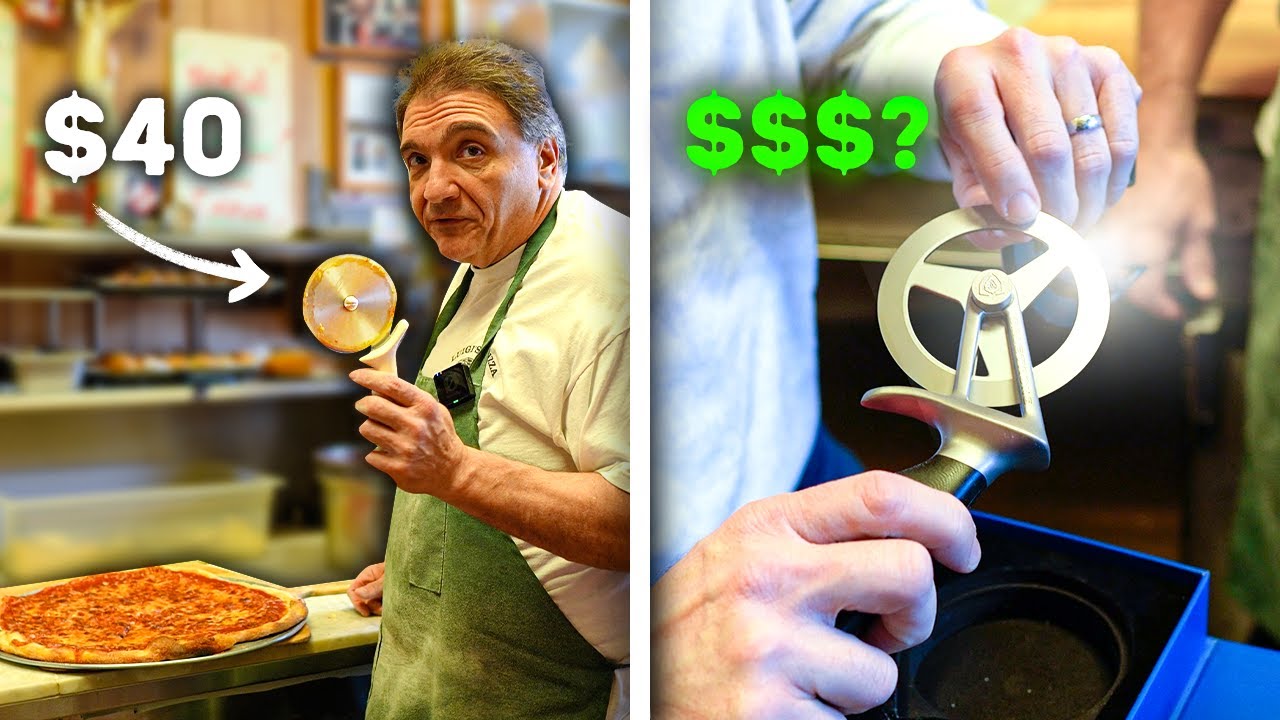
Its larger wheel suits users wanting more crust clearance than a smaller household wheel, and that extra diameter can work especially well on thicker crusts, so it performs well when cutting thick-crust pizza. Advantages include clear care guidance and an easy-grip handle; limitations include a larger footprint than compact cutters and the normal need to clean around a fixed axle.
Gozney Pizza Rocker. The Gozney Pizza Rocker combines a wooden handle with a 13¾-inch, 2 mm thick stainless-steel blade. Its full-width rocking form lets it cut across an entire pizza in one pass, which may appeal to any fan of a decisive downward motion.
The broad blade can reduce repeated rolling, but it needs protected storage and more cabinet space. The official product page reviewed does not state dishwasher compatibility, so care instructions should be confirmed before purchase and the wooden handle should be treated conservatively.
OXO Good Grips 4-Inch Pizza Wheel. The OXO Good Grips 4-Inch Pizza Wheel uses a stainless-steel wheel and has a large soft handle designed to absorb pressure, plus a die-cast zinc thumb guard. These features make it the comfort-focused conventional wheel in the shortlist, and on thick-crust pizza it will often feel almost effortless.
The guard provides clear hand separation, while the larger handle may suit users who dislike narrow metal grips. Buyers should still inspect axle access and joint cleaning; the official product page reviewed does not state dishwasher compatibility. On some designs, OXO Good Grips uses plastic contact surfaces around the wheel or edge protection that help protect non-stick pans from scratching.
Joseph Joseph Disc Easy-clean. The Joseph Joseph Disc Easy-clean is a handle-free disc cutter that uses a circular stainless-steel blade and is designed for direct operation, and the blade can be removed for cleaning. Its reversible silicone guard protects the edge during storage, and the brand lists the product as dishwasher safe.
The compact format suits small kitchens and drawers with limited space. Its trade-offs are the unconventional palm grip and possible clearance limits around thick crusts, both of which should be checked through use rather than assumed from appearance.
Is Dishwasher Safe Always Best for Blade Life?
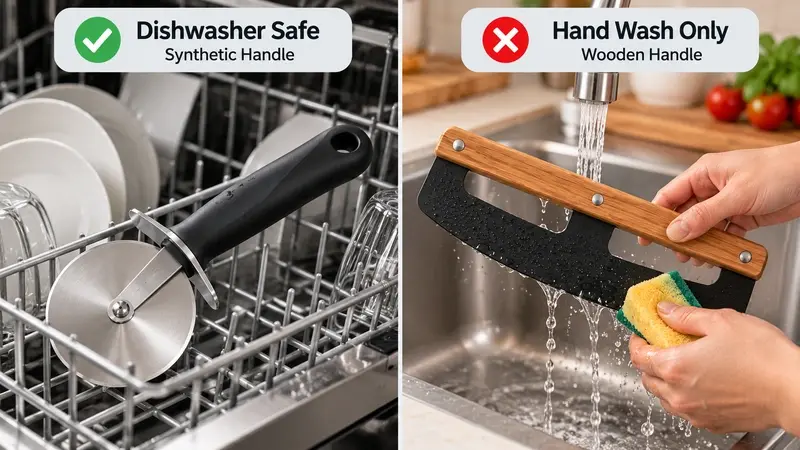
A dishwasher-safe label means the manufacturer permits machine washing under its stated care conditions. It does not promise that the edge will remain sharp indefinitely or that every joint will dry completely.
In our product work, we generally recommend hand washing sharp cutters when the goal is to extend blade life. Strong water movement can make the blade contact other utensils, while moisture left around rivets, axles or internal metal parts may encourage corrosion or loosening over time.
This advice does not cancel an official dishwasher-safe claim. It separates cleaning compatibility from gentler long-term care, a distinction explained further in our guide to what dishwasher safe really means in kitchenware.
Wooden-handled pizza cutters need more conservative care. Repeated heat, moisture, long wash cycles and alkaline detergent can remove protective oils, roughen the surface and contribute to swelling, shrinkage, fading or cracking.
Wash wood by hand, avoid soaking it and dry it promptly. If the maker supplies specific oiling or maintenance instructions, follow those instructions rather than applying a general treatment.
Safety, Storage and Easy-Clean Design
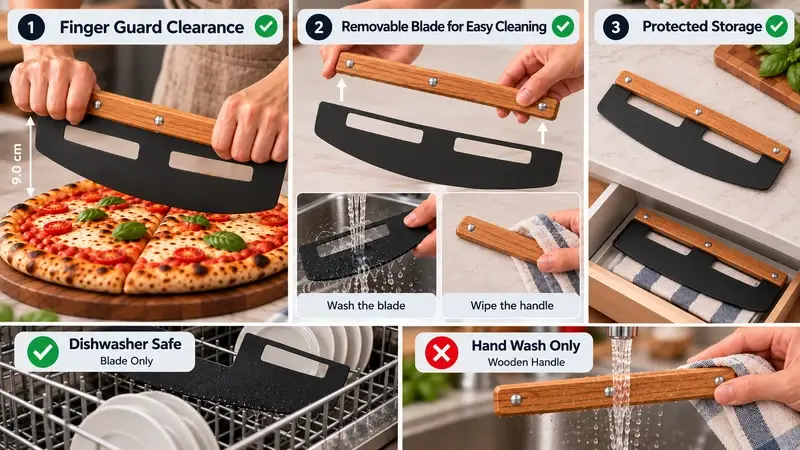
A finger guard should reduce the chance of the hand sliding toward the blade while still allowing a natural grip. Check its position during forward cutting pressure, not only while holding the unused cutter.
Cleanability also affects safety. Axles, fork-style supports, seams and removable guards should be accessible enough to rinse, inspect and dry without placing fingers against the edge.
For storage, cover the blade whenever a suitable blade guard is supplied, since it supports safer storage and helps reduce drawer contamination. A rocker needs a sheath or protected cabinet position, while a wheel should not sit loose where someone can reach into a drawer and contact the edge; before you store the cutter, the blade should be covered whenever a guard is included.
A removable blade can simplify cleaning, but only if it locks securely after reassembly. Before the next use, confirm that every removable part is fully seated and cannot release during cutting.
Maintenance and Sharpening
Wash away cheese and sauce soon after use, then dry the axle, rivets and handle joints. Regularly check for wheel wobble, loose fasteners, chips, corrosion and changes in rotation.
Sharpen the cutter only when the manufacturer supports a safe method. Small round blades can be difficult to hold at a consistent angle; if the edge is chipped, the wheel is loose or the structure cannot be secured, replacement may be safer than improvised sharpening.
Do not cut directly on a pizza stone, ceramic plate or metal tray. Hard surfaces can damage the cutting edge, and concentrated pressure may also mark or damage the surface underneath.
How to Cut a Pizza Properly
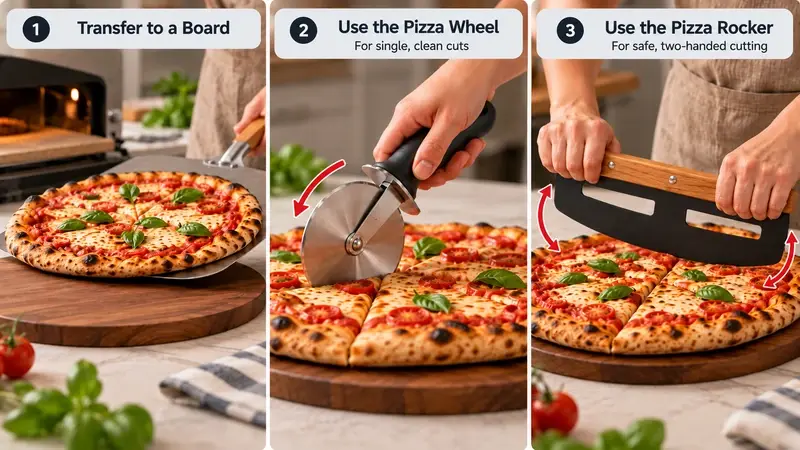
Move the pizza onto a clean, stable cutting board before cutting. USDA guidance recommends washing cutting boards with hot, soapy water after use, rinsing them and allowing them to dry.
For a wheel, begin at the near edge and use firm downward pressure through the full diameter in one controlled motion for cleaner pizza cutting from edge to the opposite edge. Avoid repeated short strokes, which can move toppings and create uneven slice lines.
For a rocker, place both hands securely on the handles or approved grip areas, and work with the approved grip areas only, then press and rock the blade across the pizza. Keep fingers, serving utensils and children outside the cutting path.
After the first line, rotate the pizza or board before making the next cut. Let very soft cheese settle briefly when appropriate, and clean the cutter promptly after serving.
OEM/ODM Considerations for Retailers and Kitchenware Brands
For private-label buyers, define a pizza cutter by how it performs and how it will be sold, not by appearance alone. Confirm pizza type, blade format, wheel diameter, support structure, handle construction, cleaning method, target price and packaging before discussing color.
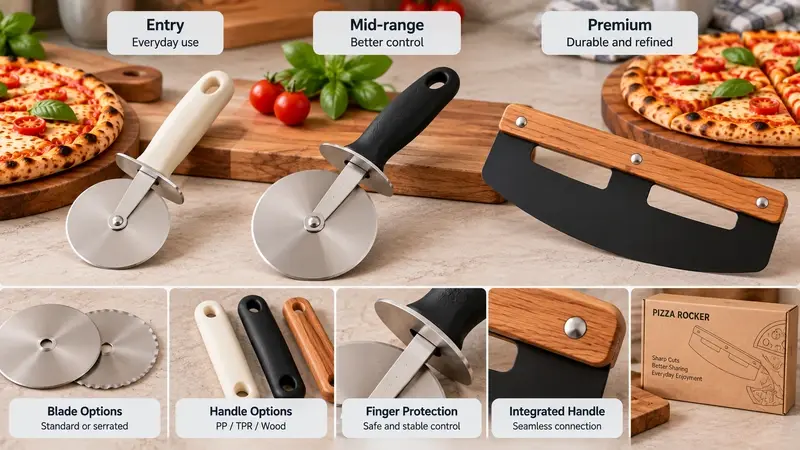
In our product-development work, practical assortments usually need clear performance tiers. An entry model may use a simple molded handle; a mid-range model can add better grip and a stronger guard; a premium model may use refined finishing, an optimized rocker profile or gift-ready packaging.
Build Meaningful Price Tiers
Do not treat 410, 304 and 420 stainless steel as a simple good-better-best ladder. Steel grade alone does not predict cutting performance: hardness, heat treatment, blade thickness, edge geometry, corrosion resistance and intended use all matter. Confirm these details through samples and supporting documents.
The same principle applies to handles. Plastic supports color consistency and efficient production, while wood creates a warmer premium look but needs more careful cleaning instructions. Surface treatments and logos should reinforce the retail position without hiding weak blade or joint construction.
Compliance, Customization and Packaging
Food-contact claims must match the destination market and materials. The U.S. FDA food-contact framework, the EU’s food contact material requirements, and South Korea’s MFDS standards for utensils, containers and packages are regulatory references, not interchangeable universal “certificates.”
Ask the supplier to define the test scope, material identity, applicable limits and report validity. For German retail, this may include LFGB-related testing; requirements elsewhere may differ. A standardized finger guard, blade cover and clear care instructions also make the product safer and more retail-ready.
Packaging should protect the edge, prevent movement in transit and explain the cutter format quickly. Buyers can review the kitchenware OEM and ODM ordering process before confirming samples, compliance documents and packaging artwork. If the item is prepared for amazon or other online channels, the pack and listing should quickly state the cutter type, care instructions and key safety features.
Frequently Asked Questions
Are all pizza cutters dishwasher safe? No. Follow the manufacturer’s instructions. Even when a sharp metal cutter is labeled dishwasher safe, careful hand washing and immediate drying may better protect the edge and joints.
Which cutter suits thick pizza? A large, stable wheel or rigid rocker usually handles deep crust and heavy toppings efficiently. A compact disc better suits thin pizza and limited storage.
What wheel size should I choose? A 3.5- to 4-inch wheel is common for home use. Larger wheels may cross thicker crust with fewer rotations, but leverage and axle stability still matter.
Can I cut directly on a pizza stone? Move the pizza to a suitable cutting board. This protects the blade and avoids unnecessary impact on the stone.
Which Pizza Cutter Is Right for You?
Match the cutter to pizza thickness, cutting motion, storage space and cleaning habits. Wheels offer familiar control, rockers provide fast full-width cuts, and discs save space. Whatever the style, prioritize a sharp, stable blade, a secure grip, finger protection and realistic care instructions.
Develop Your Pizza Cutter Range with l-tools
If you are planning a private-label pizza cutter or coordinated kitchen-tool collection, send the l-tools team your project brief with your target market, retail price, quantity, materials and packaging needs. We can help turn those requirements into sample-ready specifications and a practical product range, positioned for target users who love pizza-making and kitchen tools, with input consolidated by a kitchen-tools-experienced food writer or product development team.