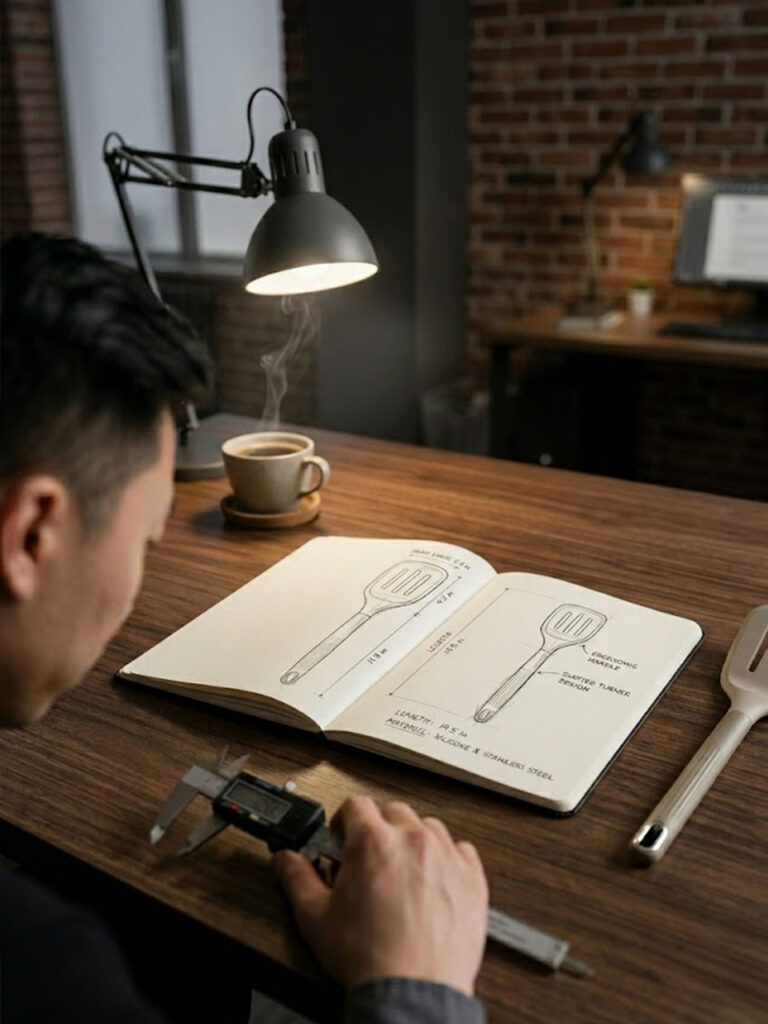
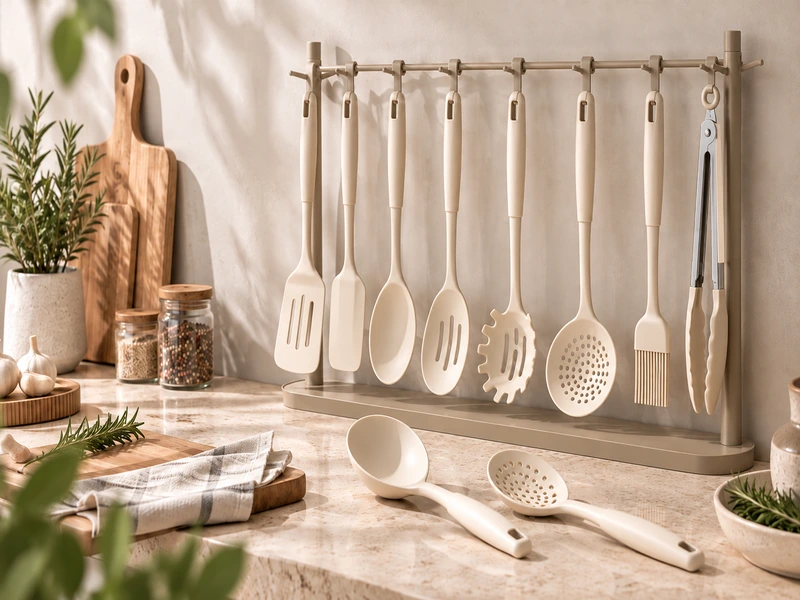
For B2B buyers, silicone cooking utensils are not simply a choice of color or set size. A successful program must connect consumer cooking habits, cookware compatibility, target pricing, compliance expectations, and retail presentation before samples move into production.
This guide is written for kitchenware brands, importers, wholesalers, retailers, e-commerce sellers, and product developers serving North America, Europe, South Korea, and other export markets. It will examine the decisions behind materials, construction, testing, customization, packaging, and purchasing.
The central question is practical: which tools belong in the range, and what should each one contribute? The answer should come from intended cooking tasks rather than the desire to build the largest possible set.
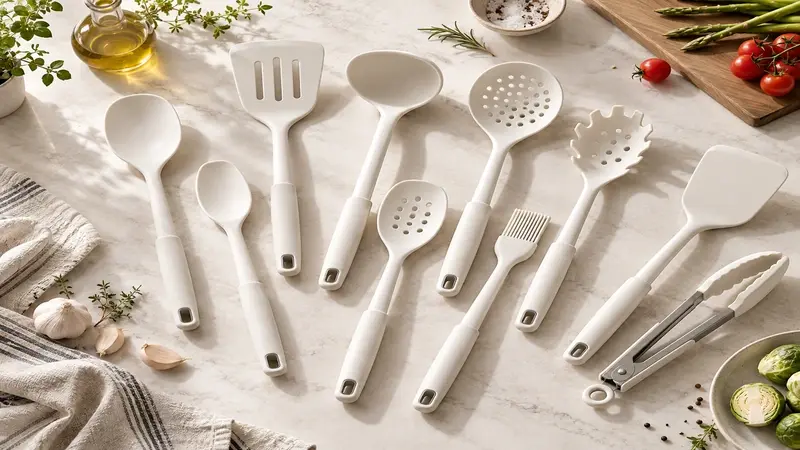
Planning a Market-Fit Silicone Cooking Utensil Range
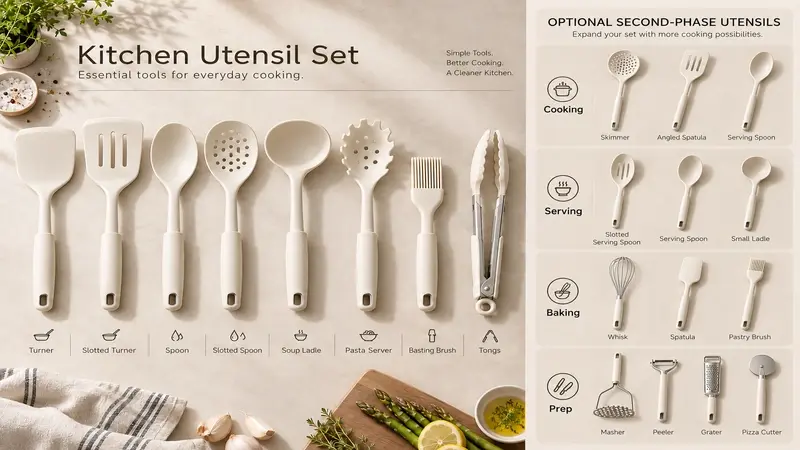
A useful silicone range normally begins with cooking tools for turning, stirring, scraping, serving, draining, and gripping. Buyers can then build five-, seven-, or ten-piece combinations from a verified kitchen utensil collection instead of treating every available SKU as equally important.
In our experience with North American programs, turners, slotted turners, cooking spoons, and spatulas are usually the first functions to evaluate. They cover frequent pan-based tasks and provide a practical foundation for a mainstream launch.
Ladles and skimmers may remain valuable, particularly for specific cuisines and consumer groups, but they do not always need to lead the first launch. They can enter a second development phase after the brand confirms its core assortment and channel demand.
Material details should also follow function. Silicone edging can add meaningful cookware protection to stainless steel turners and slotted turners used on non-stick surfaces. Applying the same edge to pasta servers, skimmers, or ladles merely for visual consistency may increase tooling, assembly difficulty, and cost without improving use.
A coherent collection is therefore not the set with the most pieces, but the one with stronger commercial value. It is the set in which each tool has a clear job, with a defined role in preparing everyday meals, an appropriate construction, and a reason to occupy shelf space, packaging volume, and inventory.
Food-Grade Silicone and Market Compliance
“Food-grade silicone” is a starting point, not a complete approval decision. It generally refers to silicone intended for contact with foods without harmful chemicals, but buyers should still confirm the intended food contact, use temperature, contact time, color formulation, and destination market before deciding which documents or tests the project requires.
In the United States, the FDA distinguishes between a food-contact substance, material, and finished article. This matters because report scope and conditions of use for one silicone compound do not automatically confirm every pigment, component, production source, or application in the finished utensil. BPA-free claims should also be tied to the confirmed formulation and supporting compliance file, rather than assumed across all versions.
For European programs, the EU food-contact framework establishes general safety and inertness principles, while buyers may also request German-market testing commonly described as LFGB testing. For a high quality European program, buyers should state the exact compliance target and, where required, ask for LFGB certification for each utensil or the corresponding test evidence for each finished SKU. South Korean projects should be reviewed against the applicable MFDS requirements and test scope rather than relying on a generic “KFDA silicone” statement.
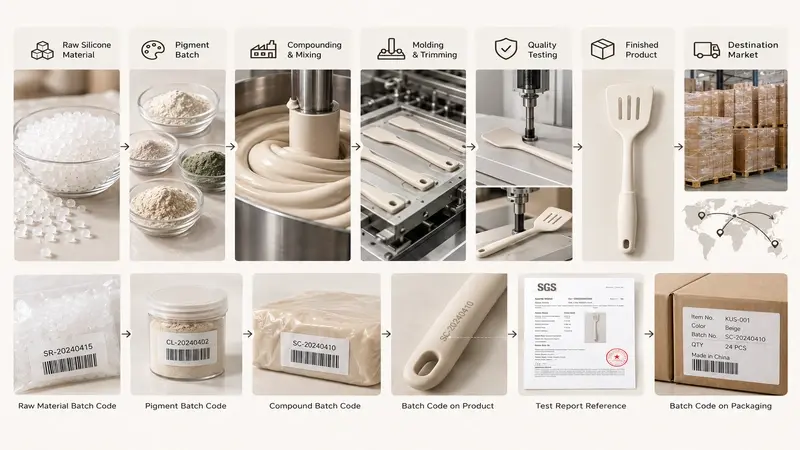
Silicone also typically does not retain odors or readily support bacteria, but that should still be confirmed against the specific material grade and test file. A practical traceability file should connect the raw-material supplier, grade, pigment batch, production batch, relevant test report, finished SKU, and sales market. If the color or formulation changes, the buyer should check whether the existing evidence still covers the revised product instead of assuming that one report covers an entire collection.
Designing Silicone Heads, Metal Cores, and Handles
Product design should begin with the functional movement the utensil must perform: scraping, stirring, lifting, turning, or draining. Head width, edge thickness, hardness, recovery after bending, neck support, handle balance, and cleaning access should then be defined in a clear silicone utensil specification. Recovery after bending affects head return, while overall flexibility in a lightweight design influences operating ease and smooth handling.
For a silicone-over-metal utensil, the internal core must be decided before the silicone tooling is completed. If the external mold is finished first, a later core design may not fit the available internal space, forcing an expensive mold modification or complete redevelopment.
The core should generally follow the working shape of the utensil so that support reaches the areas exposed to force. A narrow flat strip may allow a “metal-core” claim but provide limited practical reinforcement, especially near the head edges and neck, where it also affects long-term durability.
Separately assembled wood handles, PP, or other handles require the same structural discipline. The insert depth, locking geometry, material thickness, and stress points at the joint can determine whether the product passes a pull test or develops cracking, looseness, or handle failure during use and mass production.
From Product Brief to OEM/ODM Production
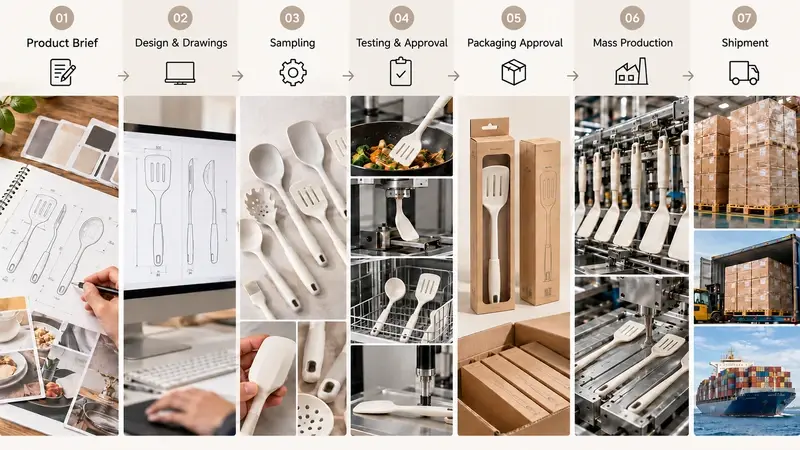
An efficient OEM/ODM project begins with a usable product brief. Before discussing colors or quotations, the buyer should define the target market, cooking tasks, set composition, construction, compliance scope, expected quantity, and retail channel. For example, the brief should clarify whether the product is a set of 5, 10, or 33 tools, since composition directly affects sampling and costing. A reference photo alone rarely provides enough information for reliable sampling.
Development can then move through drawings, component selection, prototype evaluation, color and logo confirmation, packaging development, and pre-production approval. Decisions affecting internal structure should be completed before tooling, because a late change to the core, joint, or head thickness may require mold modification and another sampling cycle.
Customization may include silicone hardness, tool dimensions, handle materials, surface textures, hanging features, logos, colors, holders, and packaging. More SKUs or single-pack items usually make development and quotation more complex. Each option affects a different cost driver, so buyers should separate essential performance requirements from decorative preferences before comparing quotations. Critical dimensions and test expectations should also appear on the approved specification.
MOQ and lead time depend on more than the molding process. Custom pigments, sourced components, new tooling, packaging print quantities, and the number of SKUs can all influence feasibility, especially when the target channel is home retail. A clear approval schedule helps prevent small decisions from delaying material ordering, production, and final inspection. Consolidating colors or shared components may also improve purchasing efficiency.
Performance Testing and Quality Control for Finished Utensils
Raw silicone data cannot predict the behavior of a complete utensil. Finished-product checks should cover incoming materials, dimensions, core position, joints, appearance, functional movement, pull strength, cleaning, heat exposure, and final random inspection. Inspection records should identify the sample, batch, method, result, and responsible person. For contact surfaces used with nonstick cookware, inspection should also confirm the tool will not cause scratches.
In one North American project, the specified method placed the utensil’s working end against a 250°C hot plate for one minute. The acceptance criteria required no deformation, melting, burning, or separation from the handle. Some food-grade silicone products are claimed to withstand temperatures up to 480°F, but that still needs verification against the finished structure. This was a defined project condition, not a universal test for every market.
When a brand requests a more demanding performance target, silicone temperature resistance is only one part of the analysis. The review must also consider how different dishes and cooking tasks create different real-use heat conditions, along with material behavior, the silicone-and-nylon structure, overmold engagement, PA66 grade, handle connections, molded thickness, and thin or unsupported deformation points.
This is why finished-product heat-resistance validation should remain separate from food-contact documentation, even though both affect product approval. Test conditions, sample quantity, acceptance criteria, and reporting method should be agreed before production so the result can guide repeatable mass-production inspection.
Packaging, Branding, and Retail Readiness
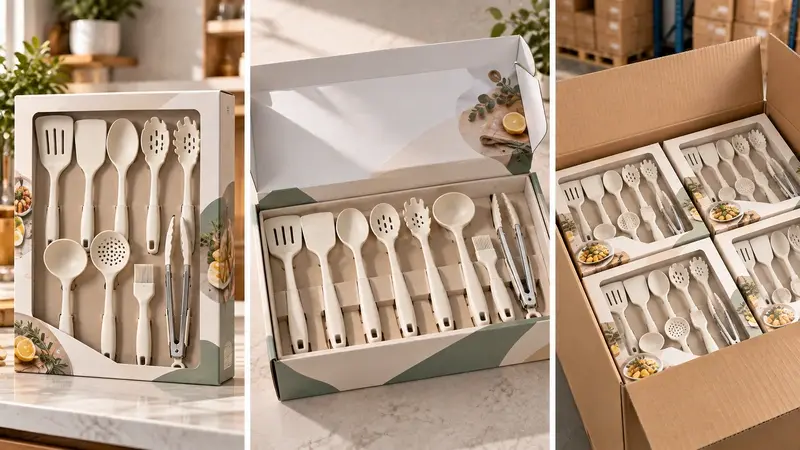
Packaging should be reviewed during product development, not after production approval. The format must balance protection, shelf communication, parcel handling, and packing efficiency across color boxes, sleeves, open displays, e-commerce mailers, or bulk cartons.
Long tools, mixed materials, and multi-piece sets for daily cooking or baking create different risks, and their packaging may also need different display priorities. Inserts should control movement without marking silicone or allowing wooden and coated handles to rub together. Buyers should also check hanging balance, window position, carton fit, barcode placement, and packed weight.
Labels should identify materials, intended use, care conditions, relevant warnings, origin, and traceability information for the destination market. Sustainability language must remain supportable. Planning a retail-ready kitchen tool set means reviewing the assortment, package, and shelf presentation to show how the tools fit into your kitchen as one system.
Silicone vs Metal Kitchen Tools: Matching Material to the Use Case
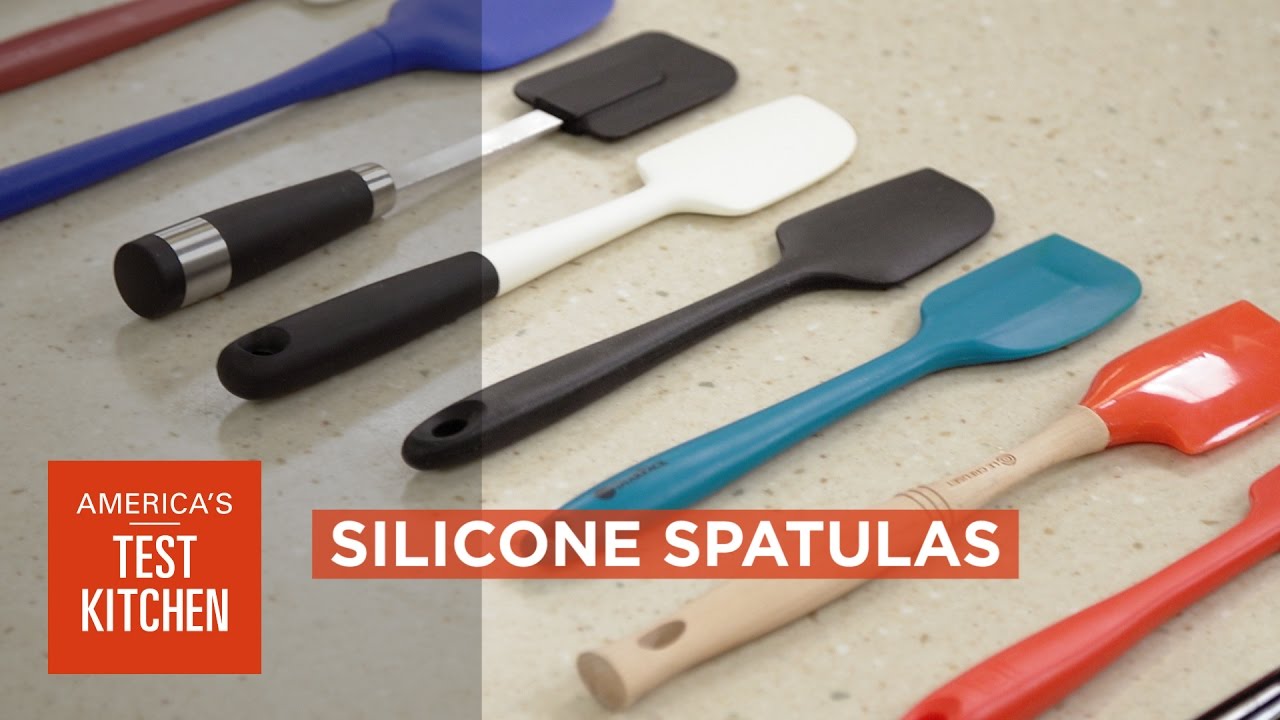
Silicone and metal are not universal substitutes. Buyers should match the material to the cookware surface, food type, required rigidity, edge geometry, and applied load instead of calling either option best for every task.
| Decision factor | Silicone tools | Metal tools |
|---|---|---|
| Coated cookware | Softer contact when properly designed | May damage some coatings |
| Rigidity | Depends on thickness and internal support | Generally higher |
| Scraping | Flexible edges follow curved surfaces | Thin, rigid edges suit other tasks |
| Heat performance | Verify the finished construction | Handle and joint design still matter |
| Cleaning | One-piece designs reduce joints, and washing is simpler because smooth surfaces shed food more easily and dry without obvious water marks | Construction affects care |
Material comparison is not only about strength; it also affects the ease of cooking and cleanup.
Le Creuset provides a brand-specific example in its official care and use guidance: it describes its silicone utensils as non-scratching and rates them to 250°C, while warning that utensils should not be left in pans. These statements apply to its specified products, not every silicone utensil.
For B2B development, define the cooking action first. Silicone-edged turners can suit coated cookware, while rigid metal tools may be preferable when a thin leading edge or greater lifting strength is required. A credible comparison explains these task-based trade-offs instead of relying on broad material claims. In that context, a silicone tool’s non-stick surface makes cleaning easy while also helping reduce the risk of scratching coated cookware.
Purchasing, Logistics, and After-Sales Planning
A useful quotation separates the product cost from tooling, custom components, set assembly, testing, inspection, and packaging. Buyers can then see which choices affect the unit price, initial investment, and repeat-order cost instead of comparing one unexplained set price. Clear care and after-sales requirements also shape the long-term value of the full set.
The lowest MOQ is not always the most efficient batch. Color quantities, packaging minimums, carton utilization, freight method, inventory turnover, and replenishment should be reviewed together. Sharing components across SKUs or limiting first-launch colors can reduce complexity without weakening the assortment.
Before confirming an order, both sides should approve the set list, dimensions, materials, construction, color standard, test method, packaging artwork, inspection criteria, delivery schedule, and shipping terms. Care instructions should also clarify dishwasher suitability, wooden-handle cleaning, heat exposure, and odor or staining expectations where relevant, including how silicone pieces are handled after washing, since they are generally easy to clean and often dishwasher-safe but should still be described by structure. Daily care can also note rinsing with water and, for light marks, wiping with a damp cloth or wet wipe.
After-sales planning should define how returned samples are assessed, what evidence is needed, and how replacement or corrective action decisions are made. A specification sheet and approved reference sample create a stronger basis for investigating batch consistency, misuse, packaging damage, or structural failure.
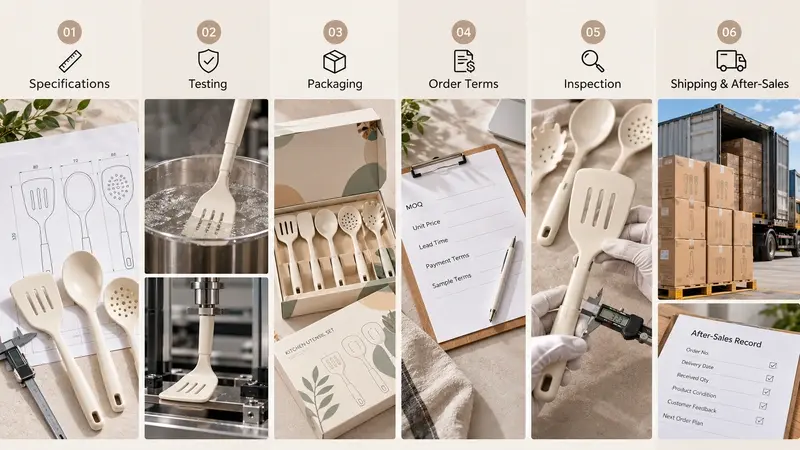
Turning Product Details into a Successful Utensil Program
A reliable silicone utensil program connects the market, the cooking task, and the product structure. Buyers should build sets around useful functions, design internal reinforcement before final tooling, and verify heat performance on the assembled product rather than the raw silicone alone.
Compliance files, packaging, inspection, and logistics must support the same approved product specification. When these decisions are aligned early, the project is easier to quote, sample, test, scale, and explain to retail or e-commerce customers.
Develop Your Next Silicone Kitchen Tool Range with l-tools
If you are developing a private-label utensil range, explore l-tools’ silicone and multi-material kitchenware options. Share your target market, required functions, preferred set size, materials, estimated quantity, compliance needs, and packaging format so the team can assess suitable products and development routes.
Ready to move from an assortment idea to a purchase-ready specification? Send l-tools your project requirements to discuss product selection, samples, customization, testing coordination, or an OEM/ODM quotation.